What is Roof Truss Uplift? how to repair ceiling cracks?
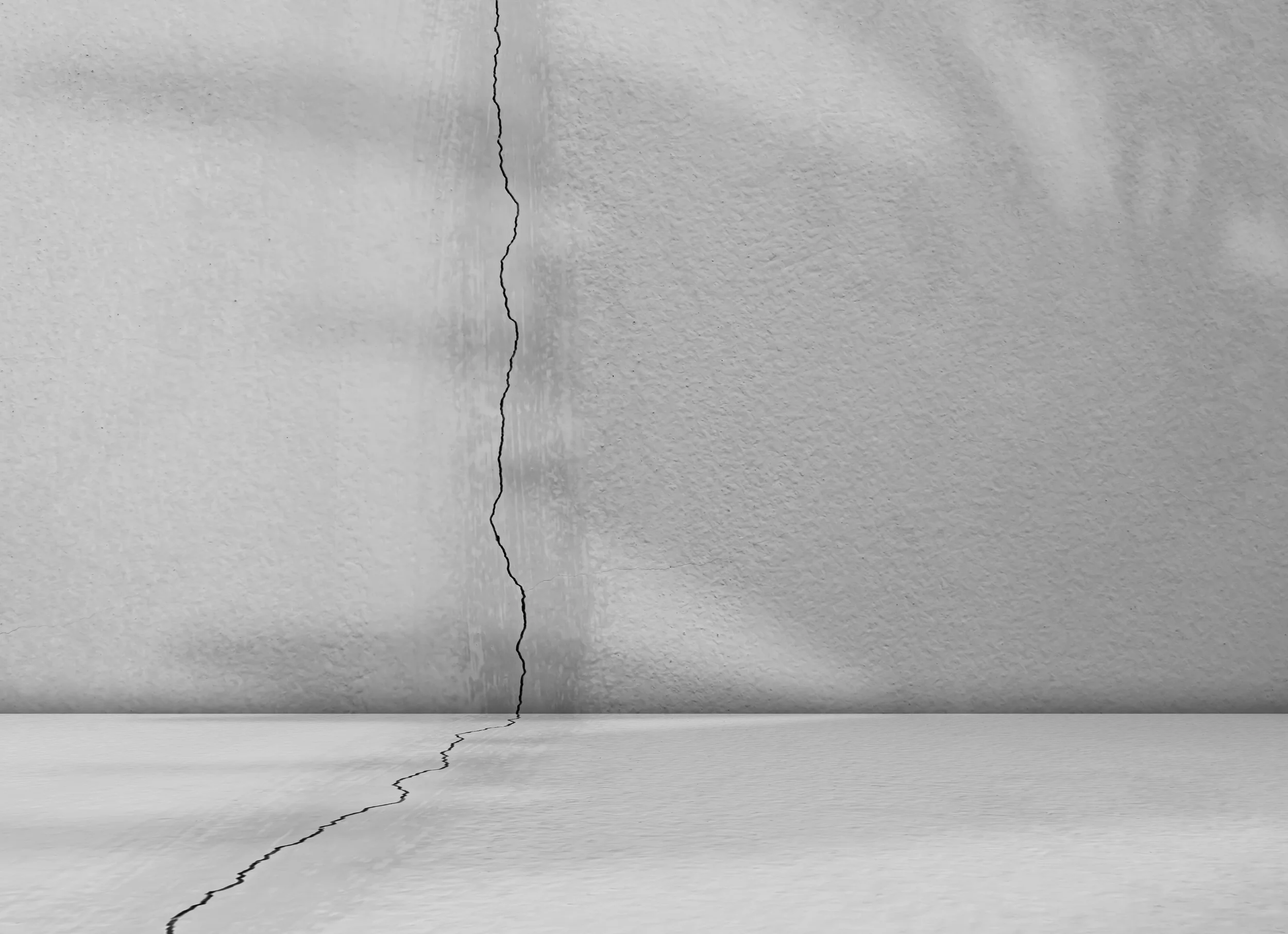
You walk through your house one January morning and notice it: a hairline crack running along the corner where your ceiling meets an interior wall. Maybe there's a small gap, the drywall has visibly separated from the partition below it. You prod it with a finger. You take a photo. You send it to your brother-in-law, who sends back a voice note with alarming energy.
Before anyone calls a structural engineer, a lawyer, or starts budgeting for a new house, take a breath. What you're looking at is almost certainly truss uplift. It's one of the most commonly misunderstood things we get asked about in residential framing, and it sounds far worse than it is.
Here's everything you need to know.
What Is Roof Truss Uplift?
Truss uplift is a seasonal movement of your roof's bottom chord, the horizontal member of the truss that sits at ceiling level, caused by uneven moisture and temperature conditions between the top and bottom of the truss.
Here's the short version of the physics: in winter, the top chords of your roof trusses are cold and dry. The bottom chord, buried in attic insulation, stays warmer and holds more moisture. Wood expands and contracts based on moisture content. When the top chords shrink from dryness and the bottom chord stays relatively stable or even expands slightly, the truss bows upward in the middle like a very slow, very shallow arch. That upward movement is called uplift.
When the truss lifts, it pulls away from any interior partition walls it was fixed to, leaving a gap or crack at the ceiling line. Come spring and summer, when temperatures and humidity stabilize, the truss flattens and the gap closes. The crack appears in winter, disappears in summer, and reappears next winter. Repeat.
Important: Truss uplift is a cosmetic issue, not a structural one. Your roof is not failing. Your house is not shifting. The truss is doing exactly what physics tells it to doand doing it the same way in houses across the entire GTA every winter.
Why Does This Happen More in Toronto's Climate?
Truss uplift is more noticeable in climates with big swings between winter and summer conditions, which describes Toronto and the GTA almost perfectly. We go from -25°C windchill in February to 35°C humidity in July. That's an extreme range, and your attic experiences both ends of it.
The attic is the key. Modern Ontario homes are well-insulated at the attic floor level, typically R-60 or higher to meet the energy code. That insulation does its job well: it keeps the heat in your living space. But it also creates a sharp thermal boundary. The bottom chord of your trusses sits just above that insulation layer, in relatively warm, relatively humid air. The top chord is above the insulation, exposed to attic air that tracks closely with outdoor temperatures.
The bigger the insulation layer, the bigger the difference in conditions between the top and bottom chords. The bigger the difference in conditions, the more pronounced the uplift movement. Well-insulated Toronto homes are, in a roundabout way, doing exactly what they should and truss uplift is the side effect.
How Do You Tell Truss Uplift from Actual Structural Movement?
This is the right question to ask, and we want to answer it clearly because not every crack in a ceiling is truss uplift, and it's worth knowing the difference.
| Truss uplift looks like this | Be more concerned if you see this |
|---|---|
| Gaps or cracks along the ceiling-to-wall junction on interior (non-load-bearing) walls | Cracks running through the middle of a ceiling, not just at corners |
| Cracks that appear or widen in winter and close up in spring/summer | Cracks that grow steadily larger over months, regardless of season |
| Clean separation — drywall pulls away from the partition below | Diagonal cracking at corners of door or window frames |
| Consistent with trusses overhead (typically at upper floors or top floor of the home) | Movement accompanied by doors or windows sticking that didn't stick before |
| No other signs of movement — floors level, walls plumb, doors and windows normal | Multiple cracks in different areas of the house with no seasonal pattern |
If you're seeing the first column, you almost certainly have truss uplift. If you're seeing the second column especially in combination it's worth calling a structural engineer to look at it. We're not in the business of telling people to ignore things that genuinely need attention.
That said, in our experience on job sites across the GTA: the vast majority of the ceiling crack calls we hear about are truss uplift. It's extremely common. It surprises homeowners because nobody told them to expect it, but it's not a rare or exotic problem.
Wait, Why Is the Truss Even Attached to Interior Walls?
Good question. In most residential construction, the bottom chord of a roof truss is not supposed to be rigidly fastened to interior non-load-bearing partition walls. The standard detail is to use a connection that allows the truss to move vertically, typically a "floating" or "slip" connection, so that seasonal movement can happen without dragging the drywall with it.
So is truss uplift a framing defect?
Usually, no, but sometimes it's made worse by how the drywall was installed. Here's the distinction:
If the truss bottom chord was left free to move (correct framing detail) but the drywall was screwed directly to it at the top (common practice), the drywall will crack when the truss moves. This is a finishing detail, not a framing defect.
If the bottom chord is nailed or screwed rigidly to the top of a partition wall, the movement is exaggerated because the truss is fighting the wall below it. This is a framing detail worth correcting.
Either way, the movement itself, the truss bowing in winter, is a natural phenomenon driven by physics. The question is how the connections around it are designed to accommodate that movement.
What Can You Do About It?
There are a few approaches, depending on where you are in the life of your project. Prevention during construction is easier and cheaper than retrofitting after the fact but there are real fixes available for existing homes too.
If you're in the framing or pre-drywall stage
This is the best time to address it. There are two things that make a meaningful difference:
Use floating ceiling connections at partition walls. The bottom chord of the truss clips to the top plate of the partition wall using a connector that allows vertical movement typically 25mm or more rather than being nailed or screwed rigidly. This is a simple, inexpensive detail that dramatically reduces the visual impact of uplift.
Keep the bottom chord clear of rigid blocking between interior walls and the truss. Any solid connection between a partition wall and the truss bottom chord becomes a point where movement is translated into cracking.
If drywall is already up
You can't retroactively change the framing connections, but you can change how the drywall is finished to accommodate the movement:
Don't caulk or mud ceiling corner cracks with rigid compound. They'll re-crack as soon as the truss moves again next winter usually more dramatically, because the repaired area is now stiffer than the surrounding material.
Use flexible caulk (paintable latex or silicone-latex blend) in the corner junction. It will move with the truss cycle without cracking.
Install a crown moulding detail at the ceiling-wall junction and nail it to the ceiling only not to the wall. When the truss lifts, the moulding lifts with it and the gap opens behind it, invisibly.
Some drywallers apply the ceiling drywall with a 50mm (2") gap from the top plate of interior walls, then use a floating bead at the junction. When the truss moves, the gap opens within the bead detail rather than cracking the face of the board.
If you want to understand your attic conditions better
Attic ventilation plays a role in how dramatically the top chord temperature fluctuates. A well-ventilated attic keeps the top chord closer to outdoor temperature consistently, which is correct but it also means the differential with the insulated bottom chord is larger in deep winter. This is one reason why the level of attic insulation matters: the more insulation, the sharper the boundary, and generally the more pronounced the potential uplift. If you want to dig into how insulation and attic conditions interact, our post on ice damming covers the attic thermal dynamics in detail many of the same principles apply.
What We Do When We Frame
When we're framing a new home in Toronto or the GTA, truss uplift is something we think about during the framing phase not something we leave for the drywall crew to deal with.
Our standard detail on interior non-load-bearing partitions is to frame the top plate with a gap between it and the truss bottom chord, and use a metal clip connector that allows vertical movement. It adds minimal time and cost to the framing work. It's not a complicated detail. But it makes a real difference to how the house performs for the person living in it.
We also make a point of briefing the homeowner and the GC about truss uplift before it happens not after. If you know to expect a small gap at the ceiling corners in February, it's not alarming. If you discover it one morning with no context, it looks like your house is falling apart. Context is free. We'd rather give it.
“The one-line version:
Truss uplift is a natural physical response to Canadian winters. It doesn’t damage your structure. With the right framing and finishing details, it can be managed so you never see it at all.”
Explore Our Services
Frequently Asked Questions
How much uplift movement is "normal"?
It depends on the span of the truss, the insulation level, and the climate swings in your specific location. For a typical Toronto home with a 10–12m truss span and R-60 attic insulation, seasonal uplift of 10–25mm at the centre of the bottom chord is within the range engineers expect. A gap at the ceiling of 5–15mm at its peak in February is not unusual and it will close again. If the gap is growing year-over-year rather than cycling, that's worth investigating further.
My house is 15 years old and this just started happening. Why now?
A few common reasons:
You recently added attic insulation. More insulation “sharper thermal boundary” more pronounced uplift.
This past winter was particularly cold or dry. Extreme low-humidity winters can amplify the moisture differential.
The house has settled slightly over the years, and a connection that was loose enough to allow movement has now tightened up.
None of these are structural concerns. They're explanations for why you're noticing it now.
Does truss uplift happen with hand-framed (stick-built) roofs?
Much less so, and here's why: with stick-framed roofs, the ceiling joists are typically nailed directly to the rafters at the top of the wall, and the whole system is more continuous and rigid. The individual members also move somewhat independently of each other, which distributes any expansion and contraction without creating a single focal movement point. Trusses are engineered as a unified component, so the movement of the whole truss is more coherent and more visible. If you're weighing truss vs. hand-frame options for a new build and this is a concern, we cover the full comparison in our roof framing guide.
Should I be worried about this affecting my attic hatch or any openings?
In rare cases, significant uplift can cause a ceiling-mounted attic hatch to bind slightly in winter. This is an annoyance, not a danger. If your attic hatch feels stiff in February and fine in May, truss uplift is the likely explanation. The fix is to plane or sand the hatch frame slightly so it has more clearance. Don't force it.
Related Reading
If you've made it this far and want to understand your roof framing more broadly, these posts go deeper on the topics connected to truss uplift: