
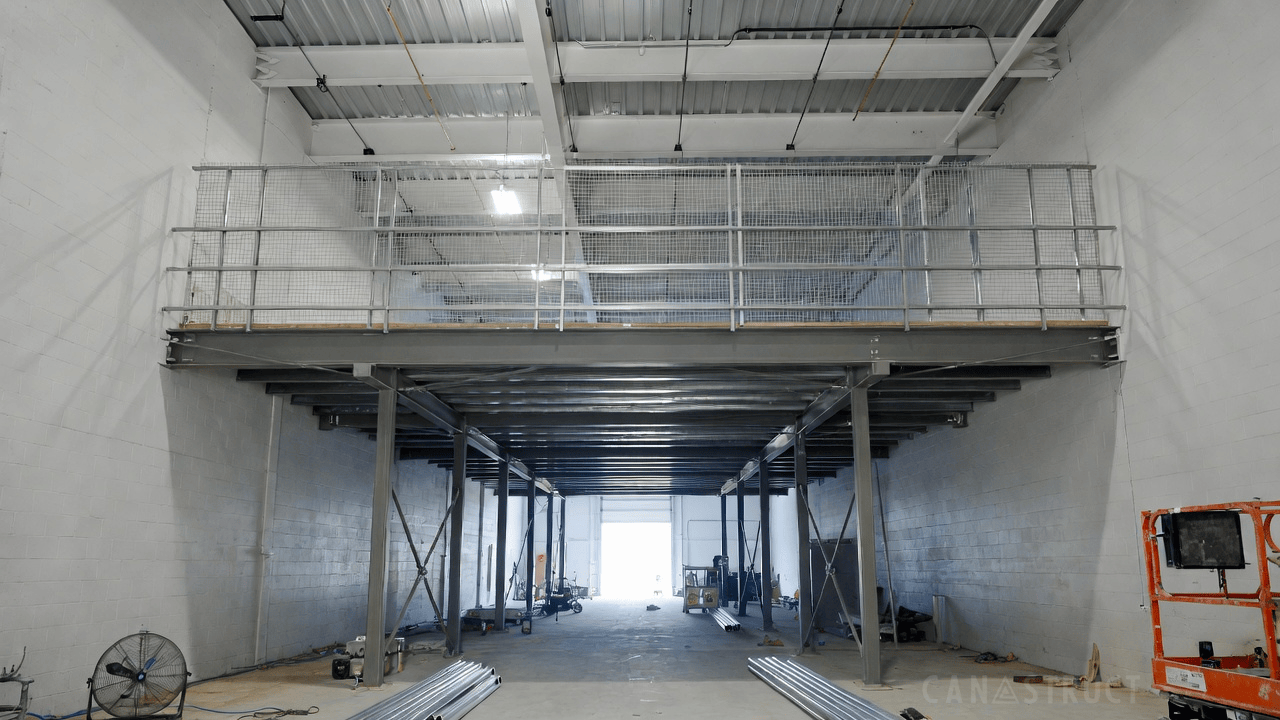
Mezzanine Framing in Toronto & GTA
Adding square footage doesn't always mean expanding your building. A well-designed mezzanine doubles your usable floor area without the cost or disruption of new construction. CanaStruct Inc delivers expert commercial mezzanine framing across Toronto and the GTA, engineered to code, built for your loads, and completed with the efficiency your business demands.
What Is Commercial Mezzanine Framing?
Commercial mezzanine framing is the construction of an intermediate elevated floor level within an existing or new commercial or industrial building. A mezzanine creates additional usable space for storage, offices, production, or retail without changing the building's exterior footprint or height classification.
Mezzanines are structural systems. They must be engineered to carry the live loads specific to their intended use; storage mezzanines carry far heavier loads than office mezzanines, and they must be permitted and inspected under the Ontario Building Code.
Key elements involved in mezzanine framing include:
Structural steel framing: columns, beams, and primary load-carrying members
Steel beam installation: main and secondary beams sized to the engineering specifications
On-site welding: structural connections that require certified welding in the field
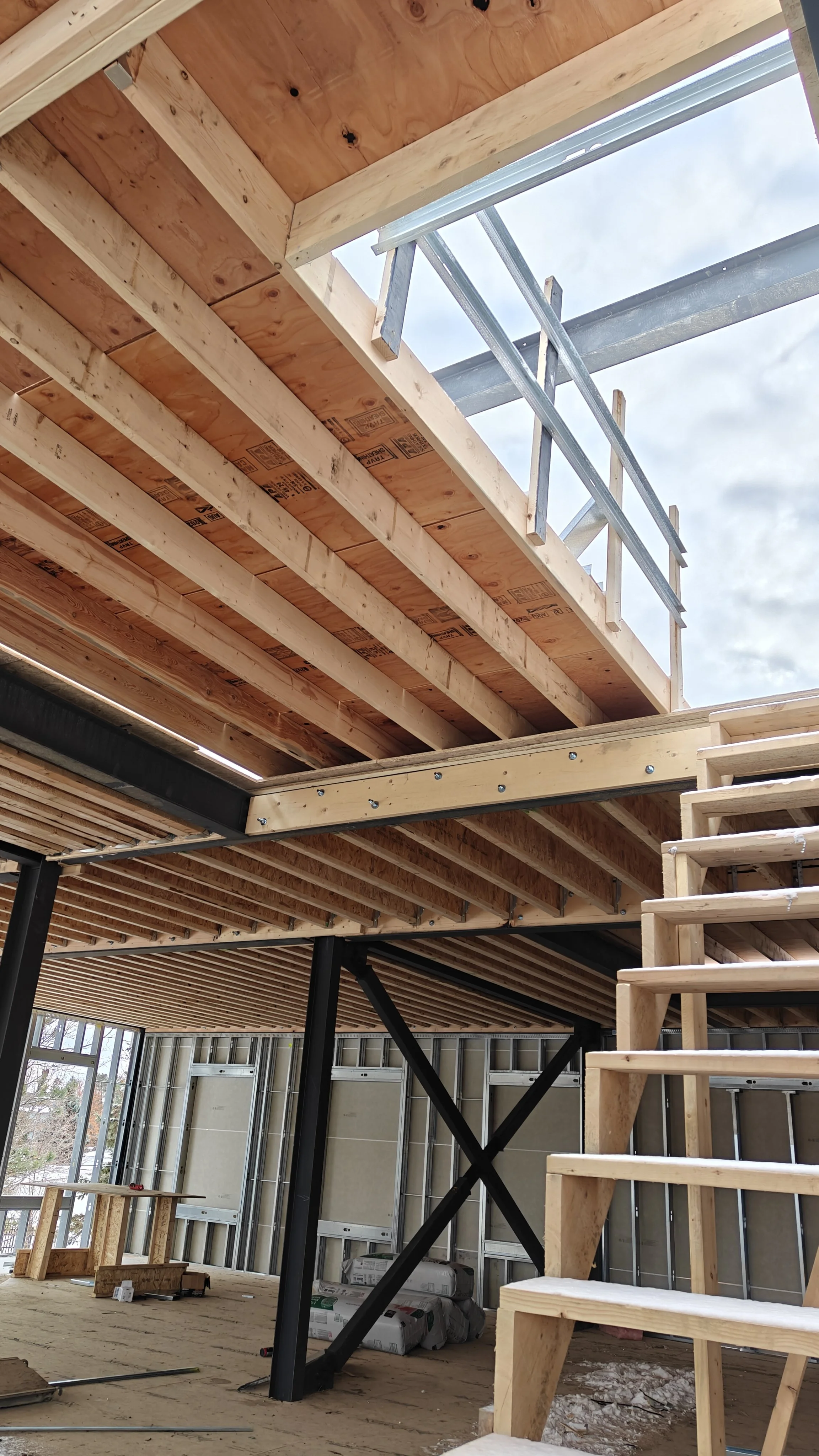
Floor decking: steel deck, concrete-filled deck, or plywood over steel joists
Stair framing: access stairs designed to code for commercial occupancy
Guardrail framing: perimeter protection built to building code height and load requirements
Industrial mezzanine construction and warehouse mezzanine construction follow the same fundamental process but differ in load requirements, span lengths, and finish specifications. CanaStruct has experience across all mezzanine applications.
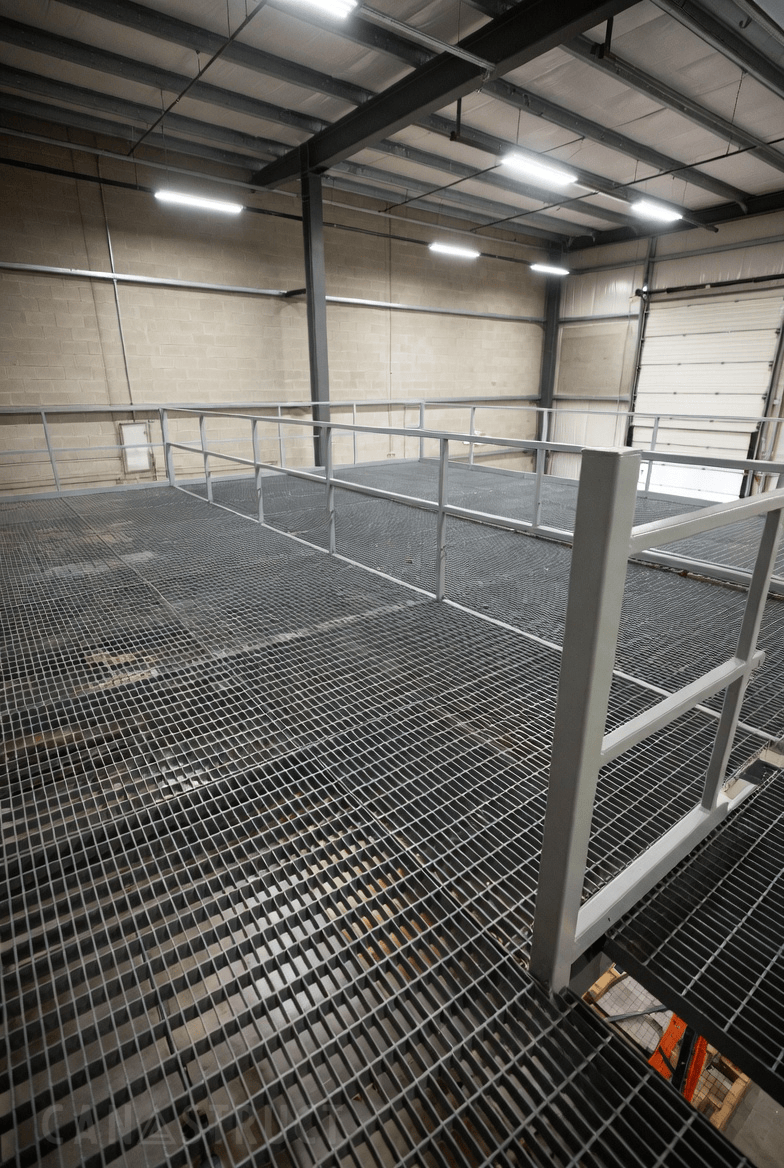
Types of Commercial Mezzanine Framing Services
-
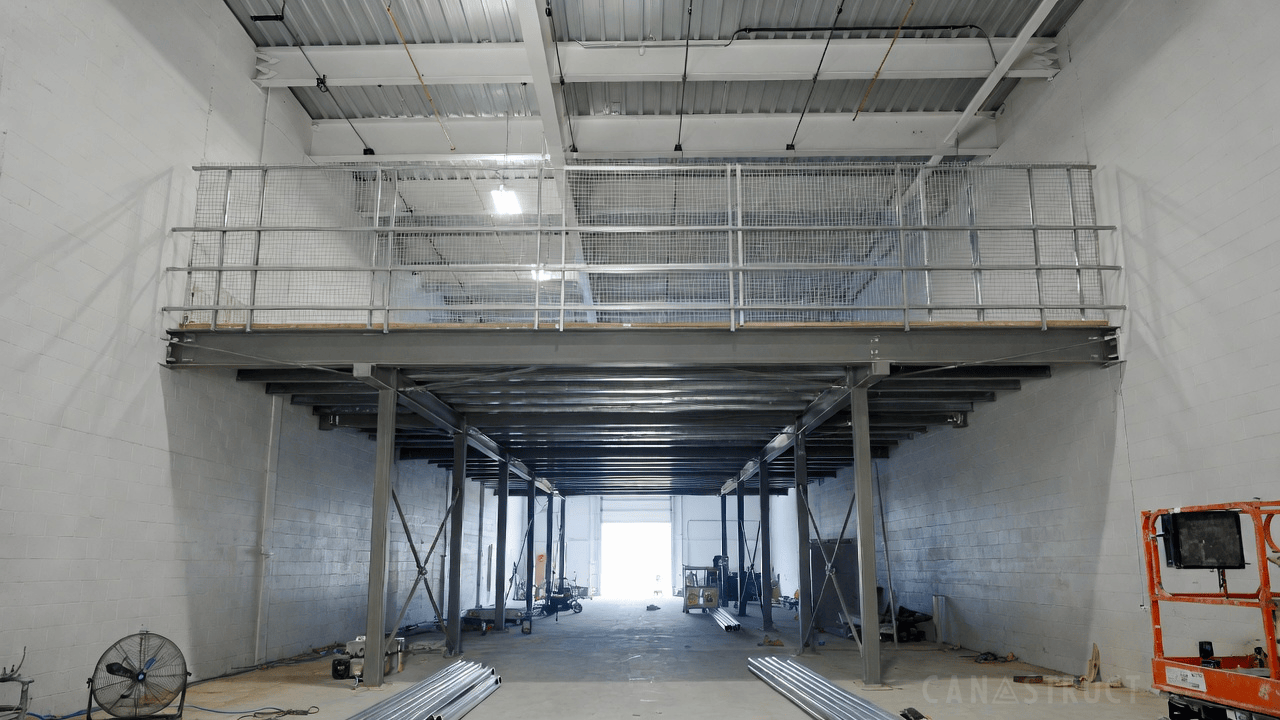
Warehouse Mezzanine Construction
Warehouse mezzanines are among the most common applications CanaStruct builds. A warehouse mezzanine typically serves as additional storage for heavy pallet loads, rack systems, or bulk goods, which means the structural framing must be designed and built for significant live loads.
CanaStruct frames warehouse mezzanines using structural steel columns and beams, with steel deck and concrete topping or heavy timber decking, depending on the application. We work in active warehouses, coordinating carefully with operations to minimize business disruption during construction.
Warehouse mezzanine construction delivers an immediate ROI: doubling your storage capacity within the same leased or owned footprint is almost always more cost-effective than relocating or leasing additional space.
-
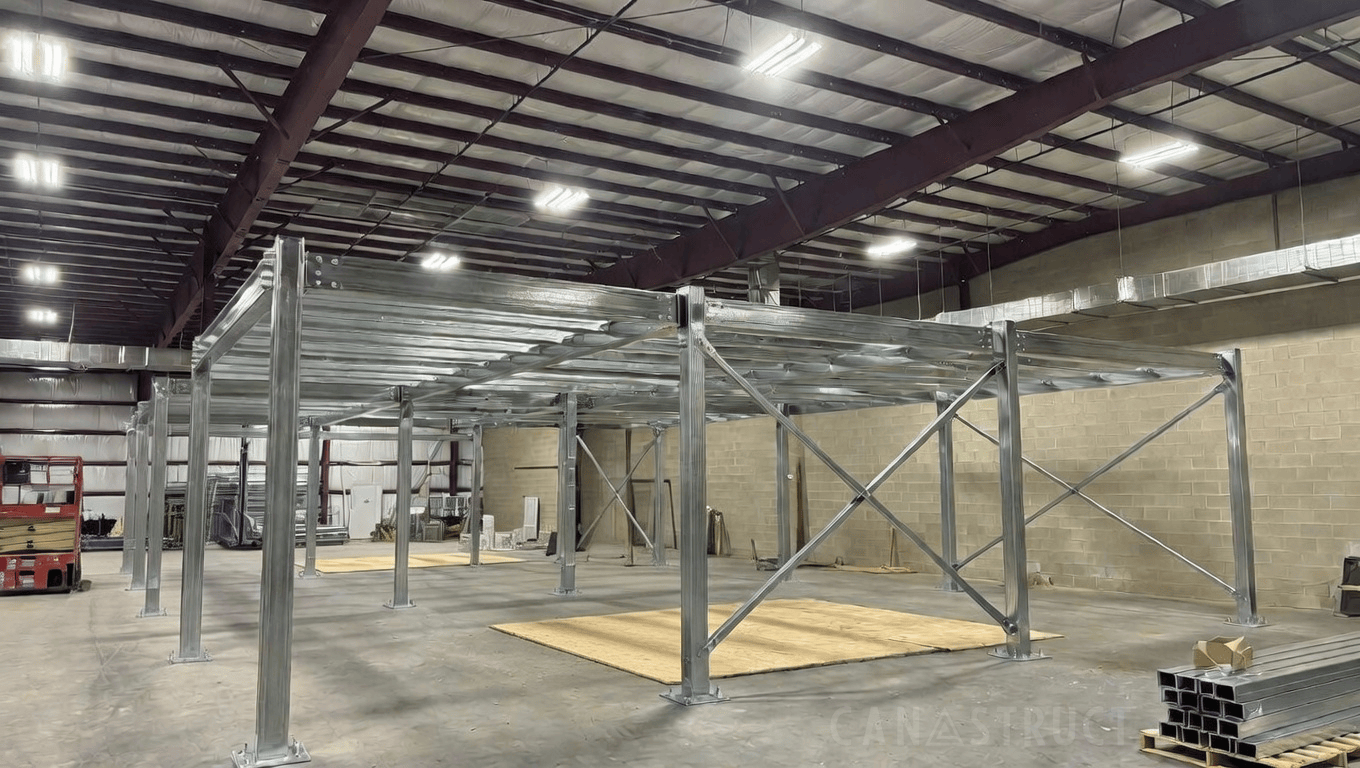
Industrial Mezzanine Construction
Industrial mezzanines serve manufacturing, assembly, mechanical, or processing functions within industrial facilities. Load requirements vary widely from light assembly operations to heavy equipment platforms, and the framing must be designed accordingly.
CanaStruct builds industrial mezzanines to engineer-stamped specifications, with
- Structural Steel Framing
- On-site welding for critical connections
- Floor systems suited to the intended use.We understand industrial environments: safety requirements, clearance constraints, process flow considerations, and the need to complete work with minimal interference to production.
-
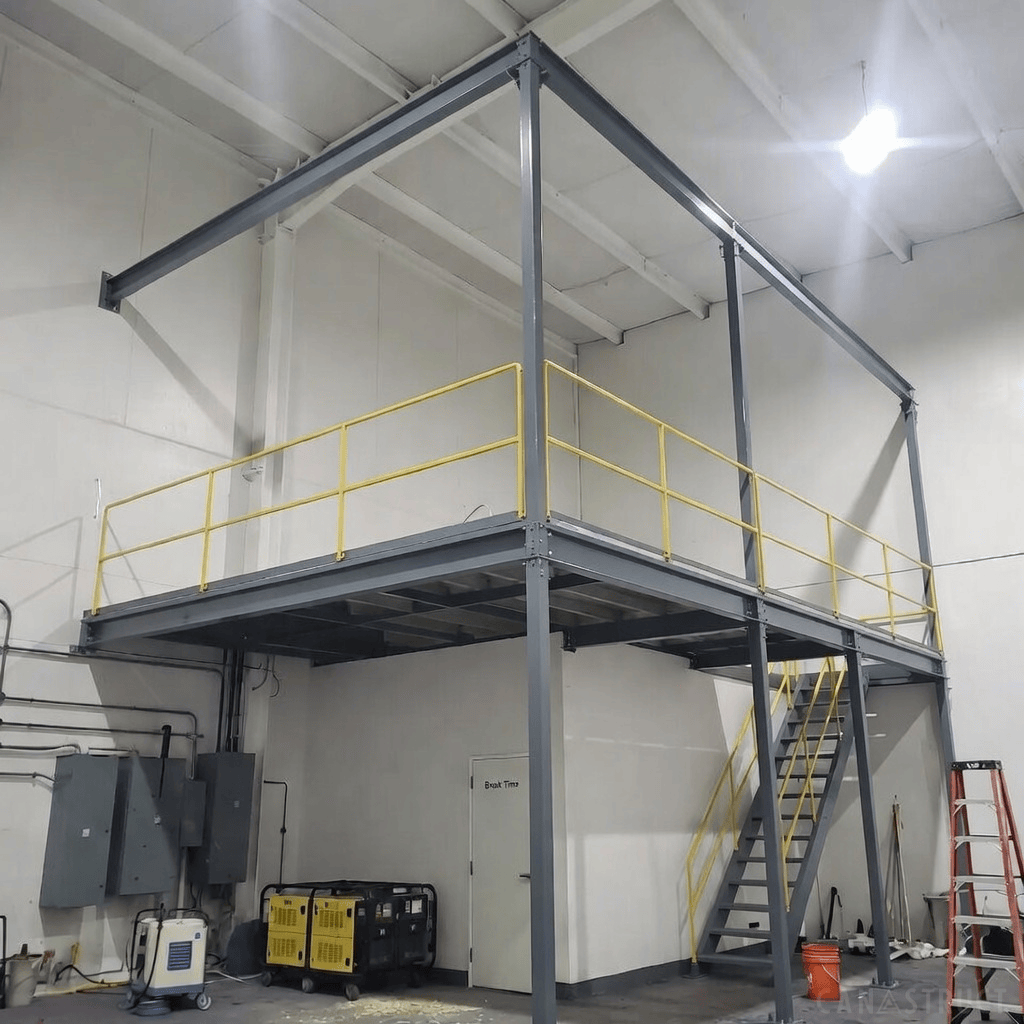
Office Mezzanine Framing
Many commercial tenants and owners use mezzanines to create elevated office space within high-ceiling retail or warehouse environments. Office mezzanines carry lighter loads than industrial applications but require attention to finish quality, stair design, and integration with mechanical and electrical systems.
CanaStruct frames office mezzanines with structural steel primary framing and floor systems suited to office occupancy, typically steel deck with lightweight concrete or engineered wood panel decking. We coordinate with your interior designer and mechanical trades to ensure the mezzanine integrates cleanly with the overall fit-out.
-
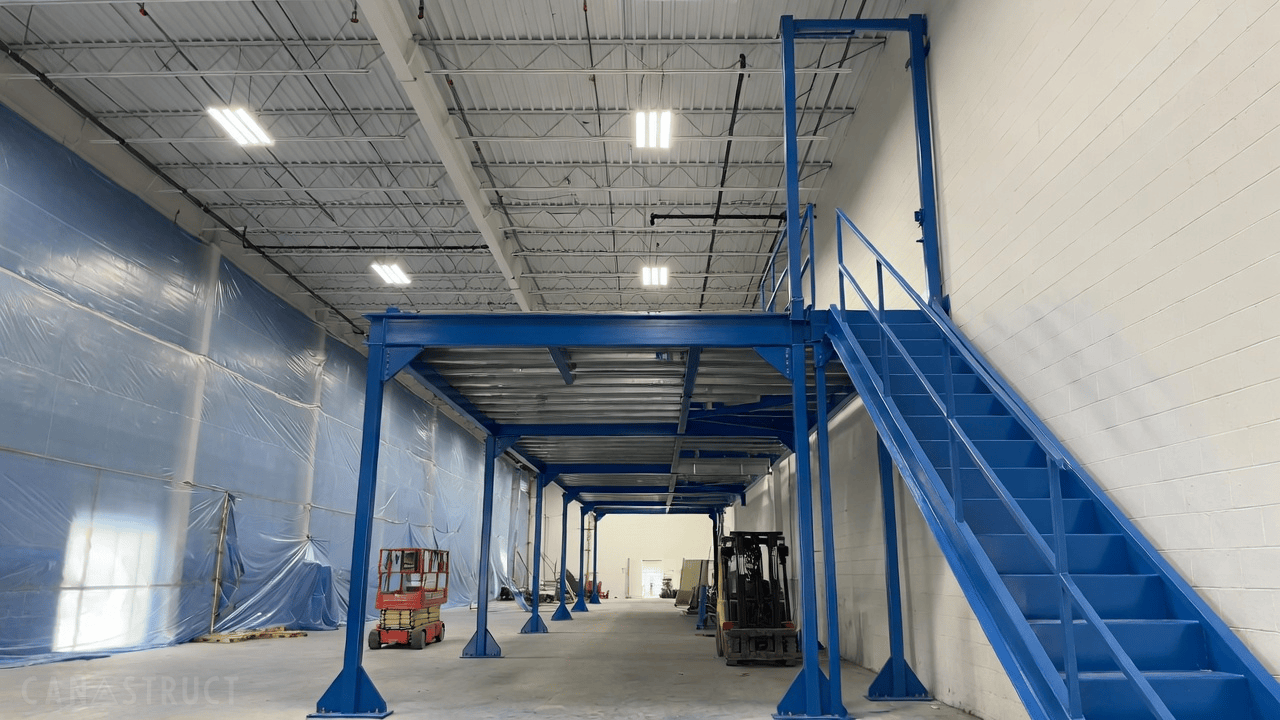
Retail Mezzanine Framing
Retail mezzanines expand the selling floor area in high-ceiling retail environments. They're common in large-format retail, showrooms, and specialty stores where ceiling height allows an elevated level. Retail mezzanines must meet specific occupancy requirements and stair/guardrail standards under Ontario's Building Code.
CanaStruct frames retail mezzanines with an eye on both structural performance and finish quality. The structural framing is built to last and designed to complement the retail environment above it.
Get started today.
CanaStruct Inc carries full commercial general liability insurance and WSIB coverage. Every project is performed by qualified, supervised tradespeople
One of the most common questions homeowners and contractors ask is whether steel framing is cheaper than wood. The answer depends on the application.
Here's a balanced comparison.
Cost: On a material-only basis, light gauge steel studs are often comparable to dimensional lumber, though prices fluctuate with commodity markets. Labour costs are similar for experienced crews. For partitions and basement work, steel is often cost-neutral or slightly higher material-wise, but savings in moisture damage, callbacks, and long-term maintenance frequently tip the ROI in steel's favour.
Durability: Steel studs don't rot, warp, shrink, or absorb moisture. Wood framing in basements, bathrooms, and exterior wall assemblies is vulnerable to moisture cycling, insect damage, and dimensional changes that cause cracking in finishes over time. For below-grade and high-moisture applications, steel stud framing significantly outlasts wood.
Performance: Steel studs are perfectly straight and consistent in dimension, unlike lumber, which varies in width, has knots, and can be bowed or crowned. This makes steel stud wall framing faster to lay out and easier to achieve flat, plumb walls. Steel also holds drywall screws cleanly and won't telegraph joint movement through finishes.
ROI: Steel stud framing is non-combustible, an advantage in fire-rated assemblies that simplifies compliance, reduces the risk of failed inspections, and often lowers insurance costs for commercial projects. For developers, the reduced callback rate and longer service life of steel-framed interiors translate directly to bottom-line savings over time.
Mezzanine vs. Building Addition
For businesses that need more space, a mezzanine is almost always more cost-effective than a building addition. Additions require site work, new foundations, exterior construction, and often complex permit processes. A mezzanine works within your existing building envelope — faster to permit, faster to build, and dramatically lower in cost per square foot of added space.
Built-In-Place Mezzanine vs. Prefab Modular Mezzanine Systems
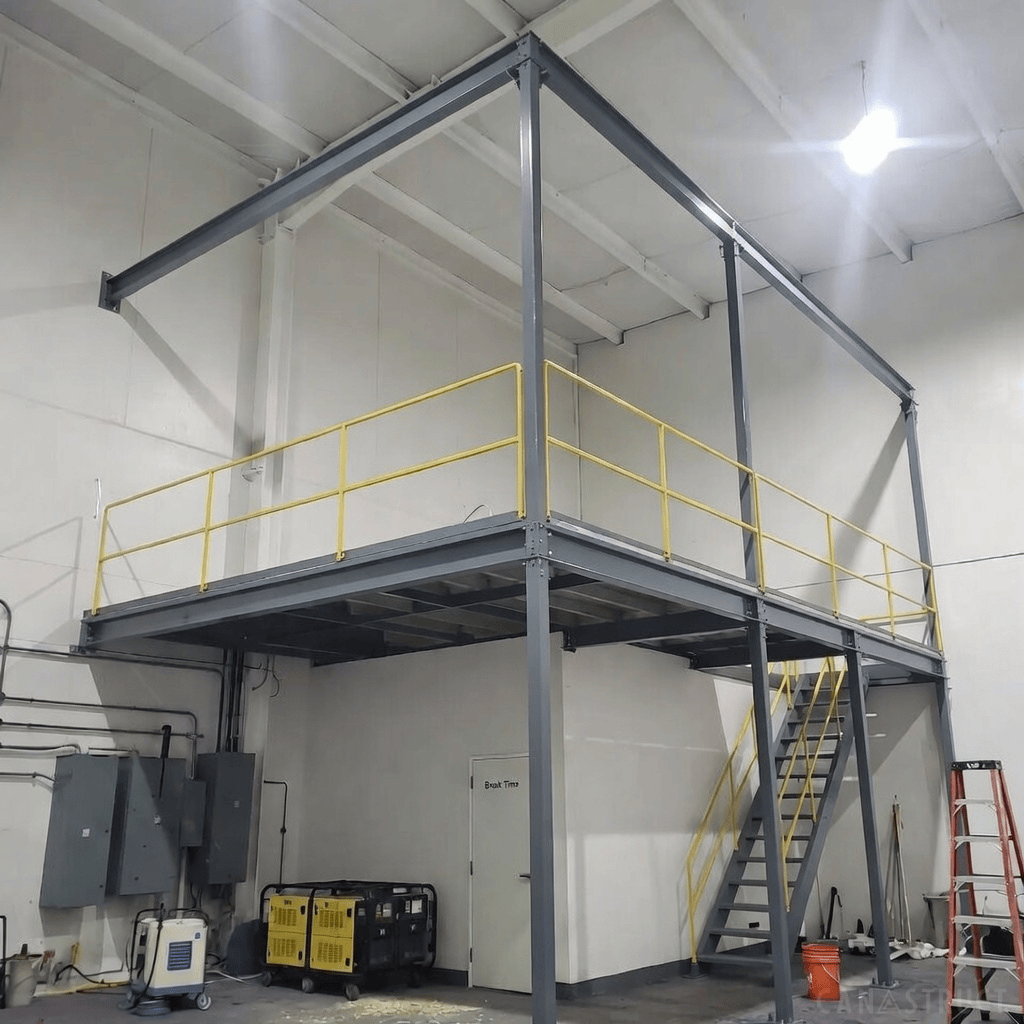
How Commercial Mezzanine Framing Works
Mezzanine framing begins with structural engineering. Before any steel goes up, a licensed structural engineer designs the mezzanine system based on your intended use, bay dimensions, column locations, and building structure.
CanaStruct works with your engineer or can refer you to structural engineers experienced in mezzanine design.
Once drawings are approved and permits are issued, the framing sequence proceeds:
Column base plate installation: anchor bolts or post-installed anchors into the existing slab
Column erection: structural steel columns set plumb and secure
Primary beam installation: main beams spanning between columns
Secondary beam and joist installation: framing the floor deck support grid
Floor decking: steel deck, composite deck, or engineered wood panels
Stair framing and installation
Guardrail framing to code
On-site welding of critical connections as required by the structural drawings
Why Choose CanaStruct Inc for Commercial Mezzanine Framing?
Licensed and Fully Insured: CanaStruct carries full commercial liability insurance and WSIB coverage. Every worker on your site is covered, and your property is protected.
Code-Compliant Construction: We build to Ontario Building Code requirements for mezzanine occupancy, stair dimensions, guardrail standards, and structural performance. Our mezzanines pass inspection.
Experienced Structural Framing Team: Our crews have built mezzanines in warehouses, industrial facilities, retail environments, and commercial offices across the GTA. This is not general framing experience — it's specific mezzanine construction expertise.
Certified Onsite Welding: CanaStruct has certified welders who perform structural field welds to CWB standards. We don't outsource critical connections.
Reliable Project Timelines: We build detailed schedules before mobilizing and communicate proactively throughout the project. Most commercial mezzanines are framed within 5–20 working days depending on size and complexity.
Transparent Pricing: You receive a detailed, itemized estimate before any work begins. Scope changes require your approval before we proceed.
Local Commercial Credibility: CanaStruct has completed mezzanine framing projects for businesses across Toronto, Mississauga, Oakville, Markham, Richmond Hill, Scarborough, and beyond. We know local inspection requirements and have earned the trust of commercial property owners and GCs throughout the GTA.
Why Professional Framing Contractors Are Essential?
Mezzanine construction is not a DIY project. A mezzanine carries people and loads; structural failures have serious consequences. Beyond safety, unpermitted or improperly built mezzanines create liability issues for property owners and may require costly demolition if discovered.
Professional framing contractors bring engineering literacy, certified welding capability, code knowledge, and the experience to execute complex steel structures accurately. CanaStruct builds mezzanines that pass inspection, carry their loads, and perform safely for decades.
Tools, Materials, and Equipment
Mezzanine framing requires structural steel sections (wide-flange, HSS, angles), calibrated torque tools for bolted connections, certified welding equipment for field welds, and precision layout tools to ensure the structure is plumb and level throughout. For larger mezzanines, a small crane or material hoist may be required to set heavy beams.
CanaStruct uses structural hardware specified by the engineer of record and doesn't substitute components without engineering approval.
Our Process
Step 1 — Initial Consultation
We start by understanding your project: intended use, required floor area, load requirements, building height and structure, and timeline. This conversation shapes the entire project.
Step 2 — Site Assessment
Our team visits your facility to review existing structural conditions, slab capacity, ceiling height, column layout, and access for construction. We identify any constraints that affect design or scheduling.
Step 3 — Detailed Estimate
You receive a comprehensive, itemized written estimate covering structural steel, labour, welding, decking, stairs, guardrails, and timeline. All assumptions are clearly documented.
Step 4 — Planning and Scheduling
We confirm permit requirements, coordinate with your structural engineer, and develop a construction schedule that minimizes disruption to your operations.
Step 5 — Execution
Our framing crew mobilizes on schedule. We sequence the work carefully — column bases, primary steel, secondary framing, decking, stairs, and guardrails — in a logical order that keeps the project moving efficiently.
Step 6 — Quality Check
Before calling for building inspection, we verify plumb and level throughout the structure, confirm all bolted connections are properly torqued, inspect all welds, and ensure stair and guardrail dimensions meet code.
Step 7 — Project Completion
The mezzanine passes inspection. We complete our scope, clean the site, and hand over a structure ready for your intended use.
Service Areas we Serve
CanaStruct Inc delivers commercial mezzanine framing services across the Greater Toronto Area. Our crews are available throughout:
Toronto (all commercial and industrial zones)
East York
Etobicoke
North York
Scarborough
Richmond Hill
Markham
Caledon
Mississauga
Oakville
Whether you're expanding warehouse storage in Scarborough, adding office space in a North York industrial unit, or building a retail mezzanine in downtown Toronto, CanaStruct is ready to deliver.
Frequently Asked Questions
How much does a mezzanine cost in Toronto?
Mezzanine framing costs depend on size, intended use, load requirements, and structural complexity. A small office mezzanine may start around $40,000–$80,000 for framing and structure. Larger warehouse or industrial mezzanines with heavier loads and concrete deck systems run considerably higher. CanaStruct provides detailed written estimates after a site assessment. Contact us for accurate pricing on your specific project.
What is the difference between warehouse mezzanine construction and industrial mezzanine construction?
Warehouse mezzanines are primarily designed for storage; they carry high live loads from pallets, racking, and bulk goods. Industrial mezzanines serve manufacturing, assembly, or mechanical functions and are engineered to the specific loads and clearance requirements of those operations. Both require structural engineering and building permits. CanaStruct builds both types across the GTA.
Do I need a permit for a mezzanine in Toronto?
Yes. A mezzanine is a new floor area within a building and requires a building permit in Toronto and across Ontario. The permit process includes structural review and framing inspection. CanaStruct works with your engineer and the local building department to ensure the permit process moves efficiently.
when is onsite welding required for mezzanine framing?
On-site welding refers to structural welding performed at the job site rather than in a fabrication shop. It's required when connection details involve moment connections, base plates, or complex framing intersections that can't be achieved with standard bolted hardware. CanaStruct has CWB-certified welders who perform onsite welding as part of our mezzanine framing scope.
How long does mezzanine framing take?
Most commercial mezzanine framing projects take between 5 and 20 working days, depending on floor area, structural complexity, and the inclusion of concrete deck topping. CanaStruct provides a detailed schedule with your estimate.
What framing companies build mezzanines in Toronto?
CanaStruct Inc is a specialized construction framing company serving Toronto, East York, Etobicoke, North York, Scarborough, Mississauga, Oakville, Markham, Richmond Hill, and Caledon. We focus on structural framing with specific expertise in commercial and industrial mezzanine construction.
Is a freestanding mezzanine different from a building-integrated mezzanine?
A freestanding mezzanine is supported entirely by its own columns and doesn't transfer loads to the existing building structure. A building-integrated mezzanine uses existing columns, walls, or structural elements as part of its support system. Both require engineering. CanaStruct builds both types, and your structural engineer will recommend the appropriate approach based on your building's existing structure.
Can a mezzanine be added to a leased commercial or industrial space?
Most commercial mezzanine framing projects take between 5 and 20 working days, depending on floor area, structural complexity, and the inclusion of concrete deck topping. CanaStruct provides a detailed schedule with your estimate.
What structural framing systems are used for mezzanines?
Most commercial mezzanines use structural steel, wide-flange columns and beams, with steel deck or composite deck for the floor system. Some lighter-duty mezzanines use engineered wood framing. CanaStruct recommends the appropriate system based on your load requirements, budget, and the structural engineering drawings.
Request Your Free Commercial Mezzanine Framing Estimate