
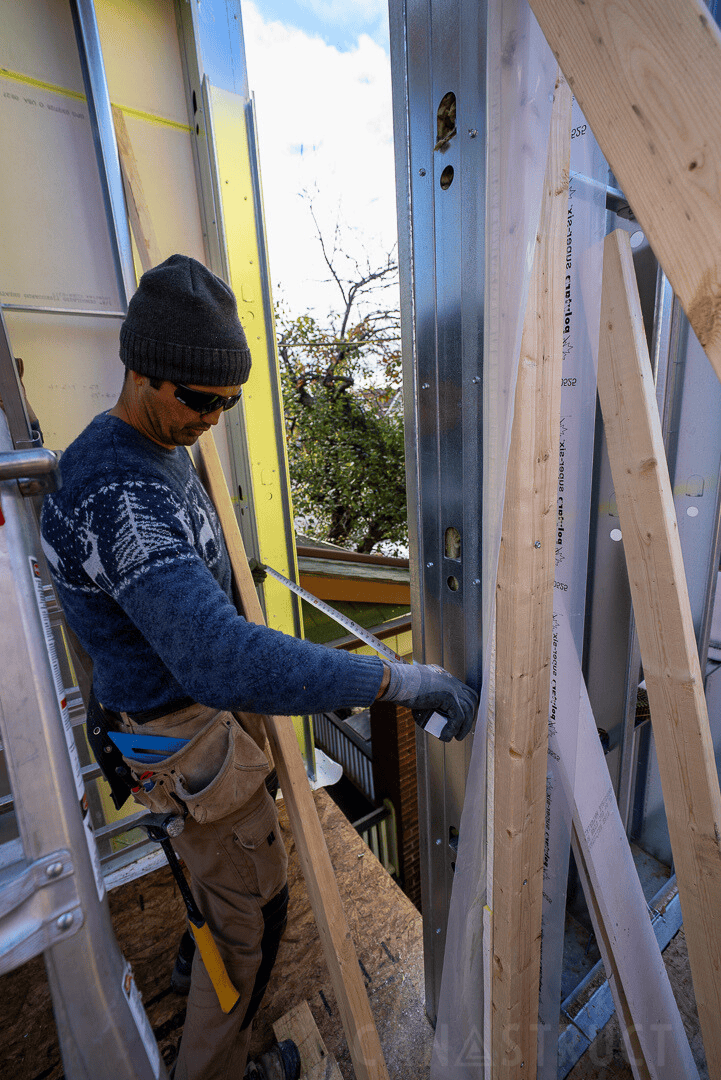
Steel Stud Framing Contractor in Toronto & GTA
CanaStruct Inc is a leading steel framing contractor serving Toronto and the GTA. Our crews specialize in light gauge steel stud framing for residential and commercial applications, delivering dimensionally accurate, moisture-resistant structures that pass inspection and perform for decades.
What Is Steel Stud Framing?
Steel stud framing — also called light gauge steel framing or cold-formed steel framing — is a construction method that uses thin-gauge steel sections to build walls, partitions, ceilings, and sometimes floors. The steel components are cold-formed (shaped at room temperature) rather than hot-rolled, making them lighter and easier to install than structural steel while still offering superior performance compared to wood in many applications.
Key terms you'll encounter when researching steel stud framing:
Cold-formed steel framing: steel sections shaped by bending at room temperature; the standard for light gauge residential and commercial applications
Light gauge steel framing: steel studs and track ranging from 25 to 12 gauge, used for non-structural and some structural framing applications
Steel stud wall framing: individual wall assemblies built using steel track (the horizontal top and bottom plates) and steel studs (the vertical members)
Structural steel stud framing: heavier gauge steel stud systems designed to carry loads, as opposed to non-structural partition framing
Steel framing services: the full scope of supply, layout, installation, and coordination that professional steel framing contractors provide
Our Steel Stud Framing Services
-
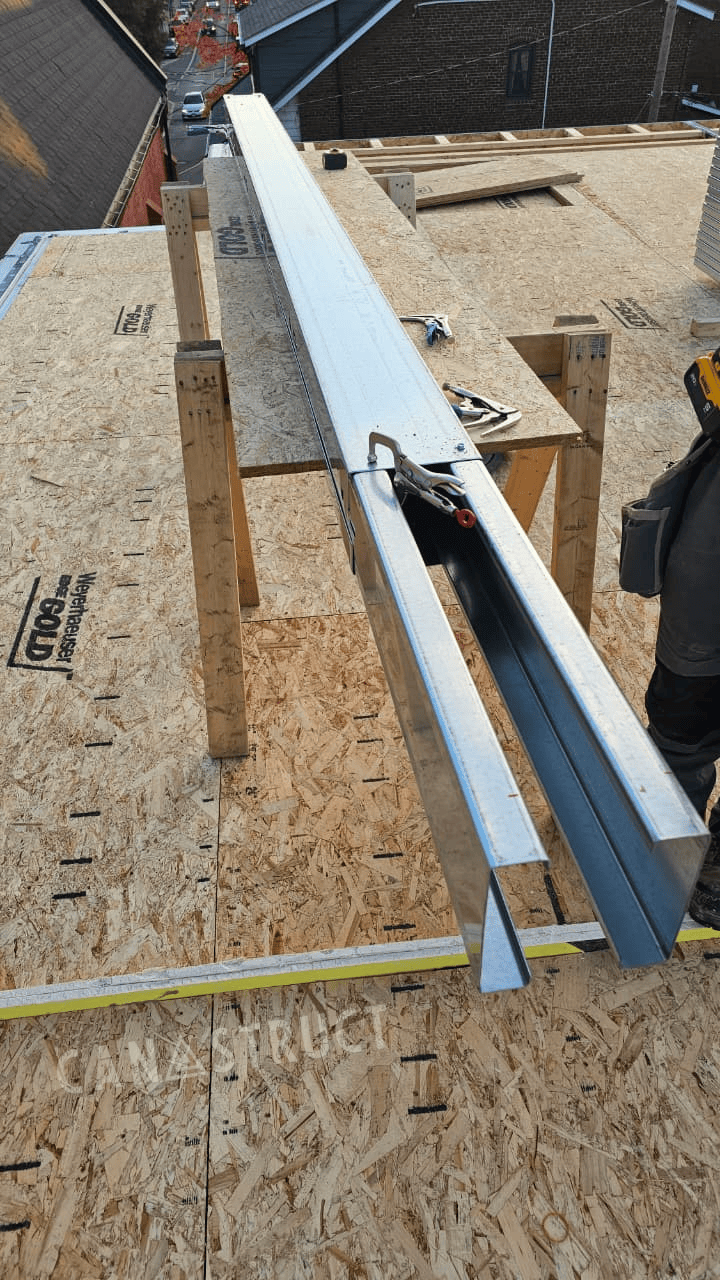
Basement Steel Stud Framing
Steel stud framing is the preferred material for basement perimeter walls in Toronto-area homes. Unlike wood, steel studs don't absorb moisture, don't warp, and won't develop mould problems when a minor basement leak or humidity spike occurs.
We frame
- Basement perimeter walls
- Partition walls
- Bathroom wet walls
- Ceiling bulkheads
using light gauge steel systems — creating a stable, drywall-ready structure built for the below-grade environment.
-
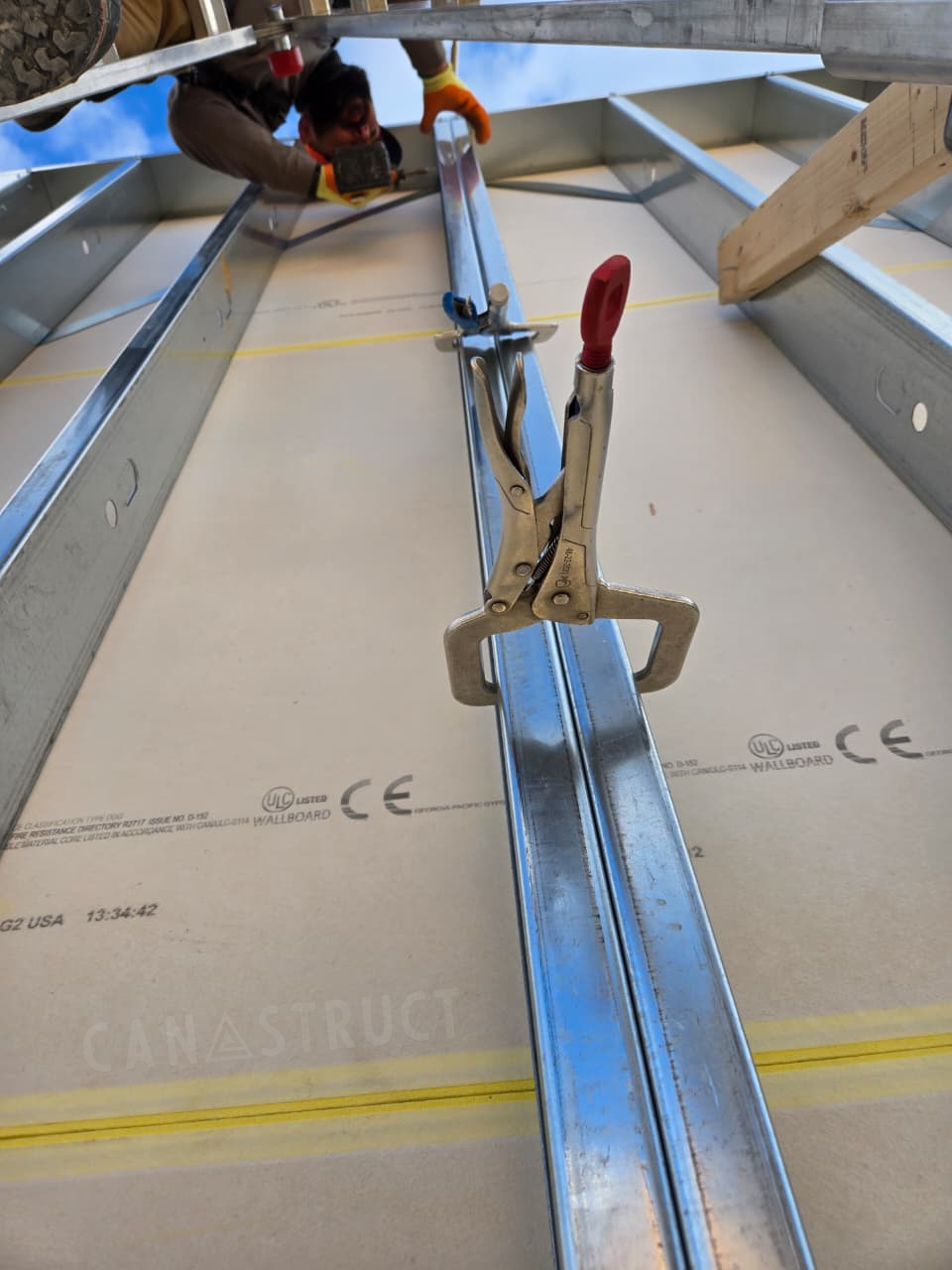
Commercial Interior Steel Stud Framing
Commercial tenant improvements and office fitouts rely heavily on steel stud wall framing for its speed, dimensional consistency, and compatibility with fire-rated assemblies.
Our steel framing contractors handle full commercial interior scopes
- Demising walls
- Corridor partitions
- Washroom cores
- Ceiling systems.
We work on architectural drawings, coordinate with the mechanical and electrical trades, and frame to the inspection standards required in commercial occupancies.
-
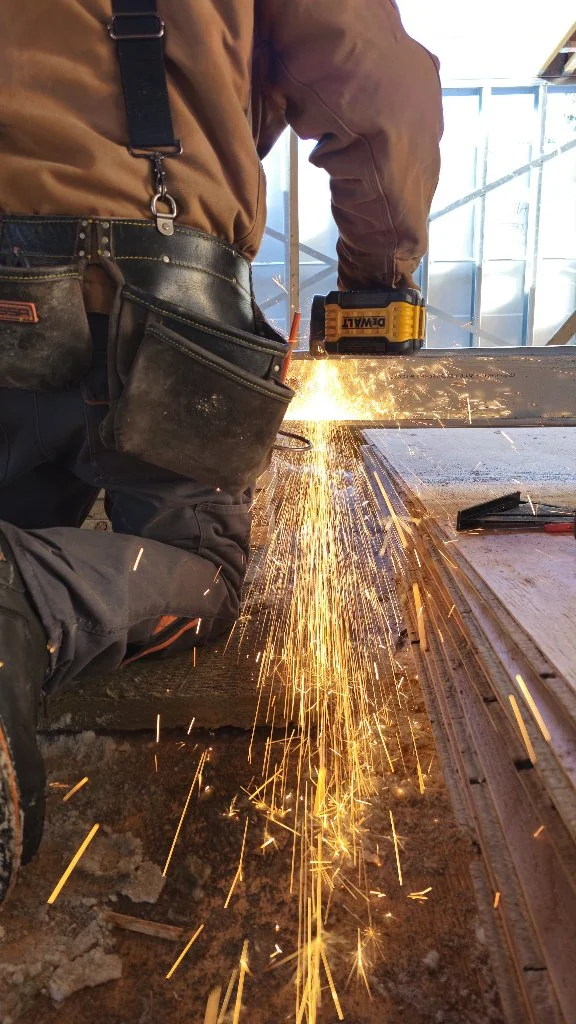
Fire-Rated Steel Stud Wall Framing
Many walls in residential and commercial buildings require fire-rated assemblies, garage-to-living separations, party walls between units, stairwell enclosures, and commercial demising walls are common examples.
CanaStruct installs UL-listed and Ontario Building Code-compliant fire-rated steel stud assemblies using the correct stud gauge, track spacing, insulation, and board type. Our fire-rated steel framing passes inspection without correction.
-
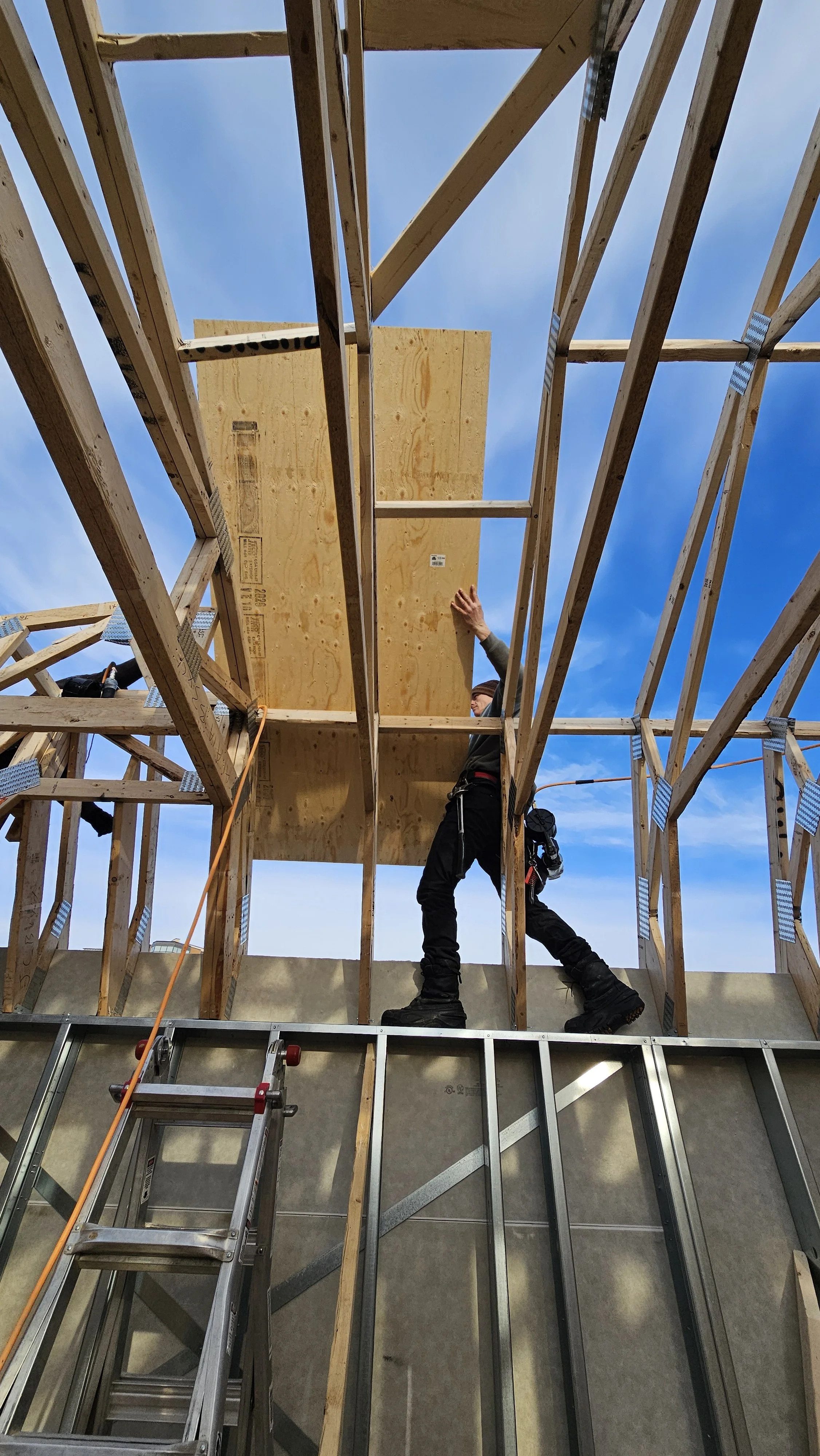
Multi-Unit Residential Steel Framing
Low-rise and mid-rise residential developments increasingly use light gauge steel stud framing for interior partition systems, corridor walls, and suite demising. Steel's dimensional stability and fire performance make it the preferred choice for building officials and developers in the GTA.
CanaStruct has the crew capacity and scheduling discipline to handle multi-unit steel framing scopes on time and to spec.
Get started today.
CanaStruct Inc carries full commercial general liability insurance and WSIB coverage. Every project is performed by qualified, supervised tradespeople
Is Steel Framing Cheaper Than Wood?
One of the most common questions homeowners and contractors ask, is steel framing cheaper than wood? The answer depends on the application.
Here's a balanced comparison.
Cost: On a material-only basis, light gauge steel studs are often comparable to dimensional lumber, though prices fluctuate with commodity markets. Labour costs are similar for experienced crews. For partitions and basement work, steel is often cost-neutral or slightly higher material-wise, but savings in moisture damage, callbacks, and long-term maintenance frequently tip the ROI in steel's favour.
Durability: Steel studs don't rot, warp, shrink, or absorb moisture. Wood framing in basements, bathrooms, and exterior wall assemblies is vulnerable to moisture cycling, insect damage, and dimensional changes that cause cracking in finishes over time. For below-grade and high-moisture applications, steel stud framing significantly outlasts wood.
Performance: Steel studs are perfectly straight and consistent in dimension, unlike lumber, which varies in width, has knots, and can be bowed or crowned. This makes steel stud wall framing faster to lay out and easier to achieve flat, plumb walls. Steel also holds drywall screws cleanly and won't telegraph joint movement through finishes.
ROI: Steel stud framing is non-combustible, an advantage in fire-rated assemblies that simplifies compliance, reduces the risk of failed inspections, and often lowers insurance costs for commercial projects. For developers, the reduced callback rate and longer service life of steel-framed interiors translate directly to bottom-line savings over time.
Why Professional Installation Matters?
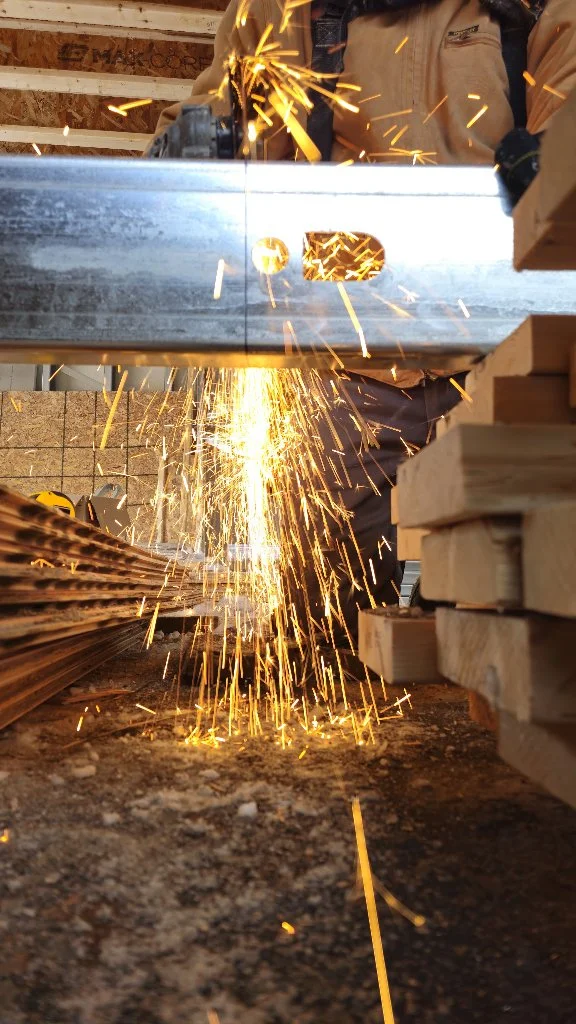
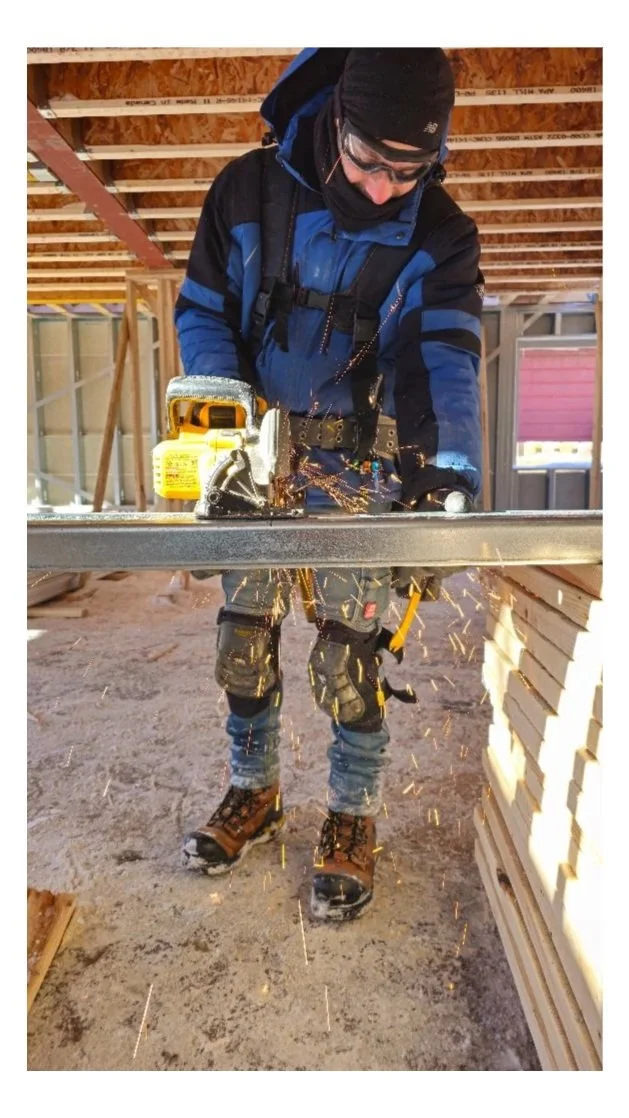
Steel stud framing starts with layout. Our crews snap chalk lines for all wall locations based on architectural drawings, then fasten the track to the floor and ceiling using powder-actuated fasteners or concrete anchors, depending on the substrate. Studs are cut to length with aviation snips or chop saws and set into the track at the specified spacing, typically 16 inches or 24 inches on centre.
Corners and intersections require blocking and bracing details. Opening headers must be correctly sized for the span. Deflection head conditions at the top track, critical in steel framing to allow for floor and ceiling movement without transferring load into the partition, must be installed correctly or the system fails over time.
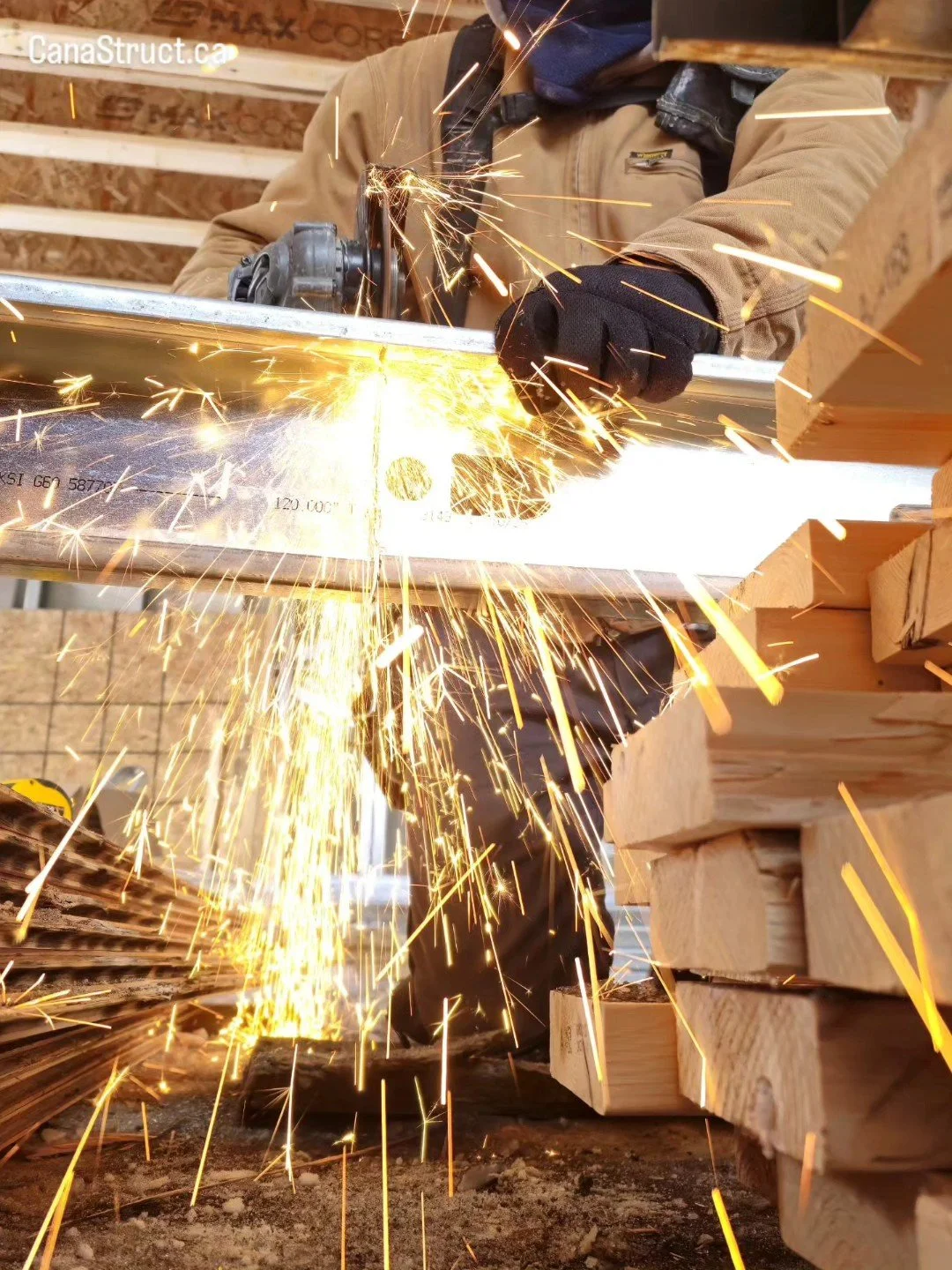
Tools required include laser levels, powder-actuated tools, aviation snips, screw guns, and measuring equipment calibrated for steel work. The fastening patterns, screw types, and connection details for steel stud framing differ meaningfully from wood — using the wrong fasteners or missing required connections produces a frame that looks fine but performs poorly.
Why not DIY?
Steel stud framing has a steeper learning curve than wood. The material is forgiving in some ways — no warping, no knots — but unforgiving in others. Incorrect deflection head details cause cracking. Wrong gauge selection compromises structural performance. Missed fasteners create loose walls. Professional steel framing contractors get these details right the first time, producing a frame that passes inspection and performs correctly for decades.
Service Areas we Serve
CanaStruct Inc provides steel stud framing services throughout Toronto and the surrounding GTA. Our steel framing contractors are available for basement framing, commercial interior framing, fire-rated assemblies, and multi-unit residential projects across the region.
We currently serve:
Toronto (all neighbourhoods)
East York
Etobicoke
North York
Scarborough
Richmond Hill
Markham
Caledon
Mississauga
Oakville
Not sure if we service your area? Contact us, and we assess all projects and can often accommodate locations beyond our primary service zone.
Frequently Asked Questions
What is cold-formed steel framing?
Cold-formed steel framing refers to steel sections shaped by bending at room temperature (as opposed to hot-rolling at high heat). This process produces lighter, thinner steel members, called light gauge steel that are used for walls, partitions, and ceilings in residential and commercial buildings. Cold-formed steel is the standard for steel stud framing in both residential and commercial construction.
What is light gauge steel framing?
Light gauge steel framing refers to steel stud and track systems produced from thin-gauge sheet steel, typically ranging from 25 gauge (thinnest, non-structural) to 12 gauge (heavier structural applications). The term distinguishes these systems from structural hot-rolled steel (like I-beams). Light gauge steel is what most people mean when they say steel stud framing.
How do you install steel framing studs?
Steel stud installation starts with fastening track to the floor and ceiling, then cutting studs to length and setting them into the track at the specified spacing. Studs are fastened at track connections and at any blocking or backing points. Critical details include correct deflection head conditions at the top track, proper sizing for opening headers, and correct fastener types for the gauge and load. Professional steel framing contractors handle these details correctly, DIY installations frequently miss deflection conditions, which causes cracking and wall movement over time.
Can steel framing companies handle commercial projects?
Yes. Commercial interior steel stud framing is one of CanaStruct's core services. We handle tenant improvement fitouts, office partitions, retail builds, and multi-unit residential interiors across Toronto and the GTA. Our commercial steel framing crews understand multi-trade coordination, fire-rated assembly requirements, and the scheduling demands of occupied or phased commercial projects.
How much does steel stud framing cost in Toronto?
Steel stud framing costs in Toronto vary based on wall area, stud gauge and spacing, ceiling height, number of openings, and whether fire-rated or acoustic assemblies are required. As a rough benchmark, interior partition framing using light gauge steel typically runs $6 to $14 per square foot of wall area for supply and install. Commercial projects with tight timelines or complex assemblies will run higher. CanaStruct provides free, detailed estimates for all scopes.
CanaStruct Inc is one of the GTA's leading steel framing companies — delivering precision steel stud framing for residential, commercial, and multi-unit projects across Toronto,