
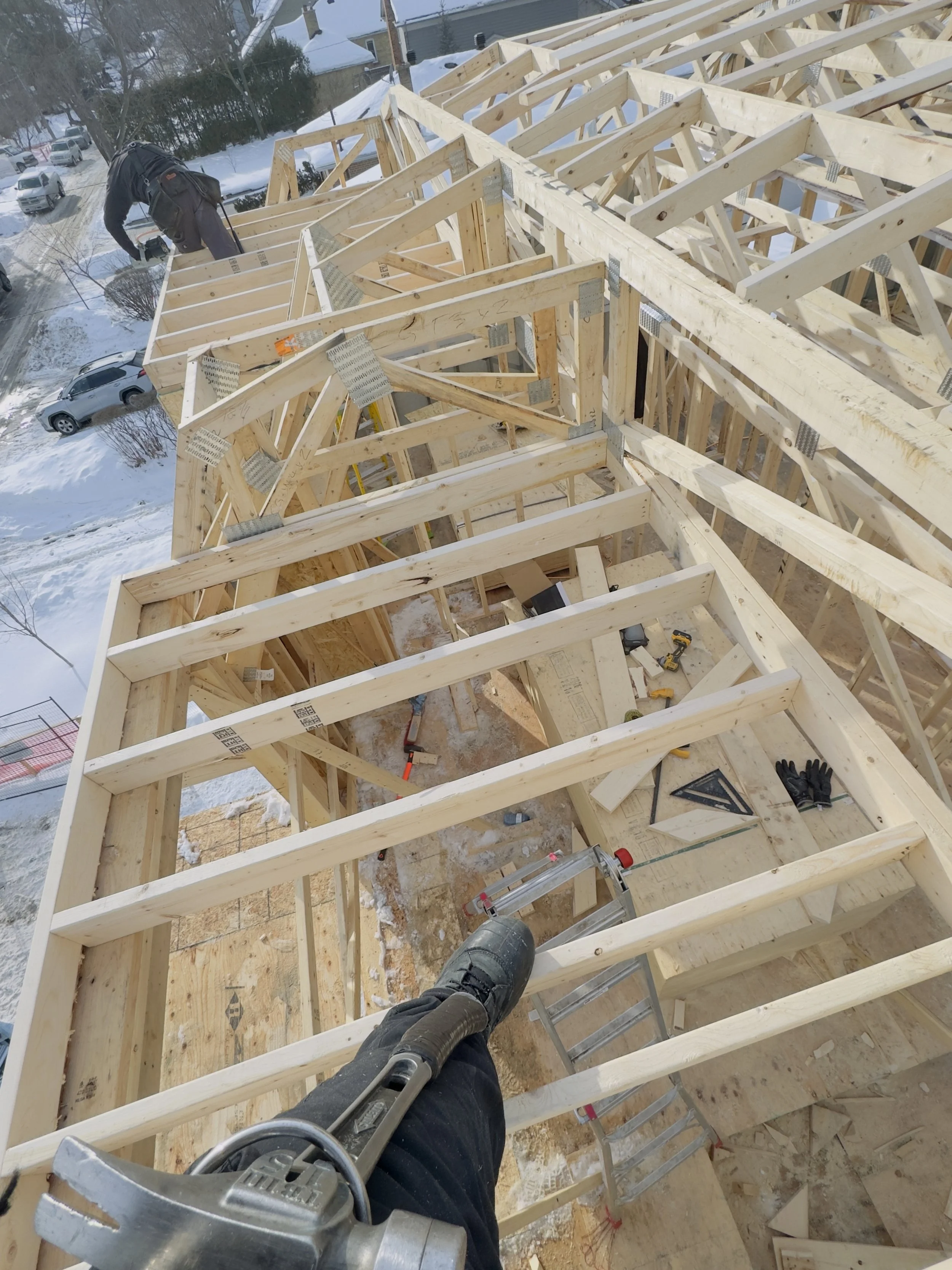
Laneway Framing Services in Toronto
A laneway suite is one of the highest-value additions you can make to a Toronto-area property. But the entire project rests on one foundation: the quality of your framing. CanaStruct Inc delivers expert laneway framing across Toronto and the Greater Toronto Area — built to code, built on time, and built to support everything that comes after.
What Is Laneway Framing?
Laneway framing is the structural phase of laneway suite construction — the process of erecting the wood or steel skeleton that gives your laneway home its shape, strength, and stability. Before insulation, drywall, mechanical systems, or cladding can go in, a qualified framing crew builds the structure that supports it all.
A laneway suite is a self-contained residential unit built at the rear of an existing lot, typically accessed from a public lane. In Toronto and across the GTA, laneway suites are permitted under city zoning bylaws and must meet Ontario Building Code requirements for structural integrity, fire separation, and height.
Laneway framing involves several key elements:
Exterior wall framing: load-bearing walls that define the building envelope
Interior partition framing: non-load-bearing walls that create rooms and corridors
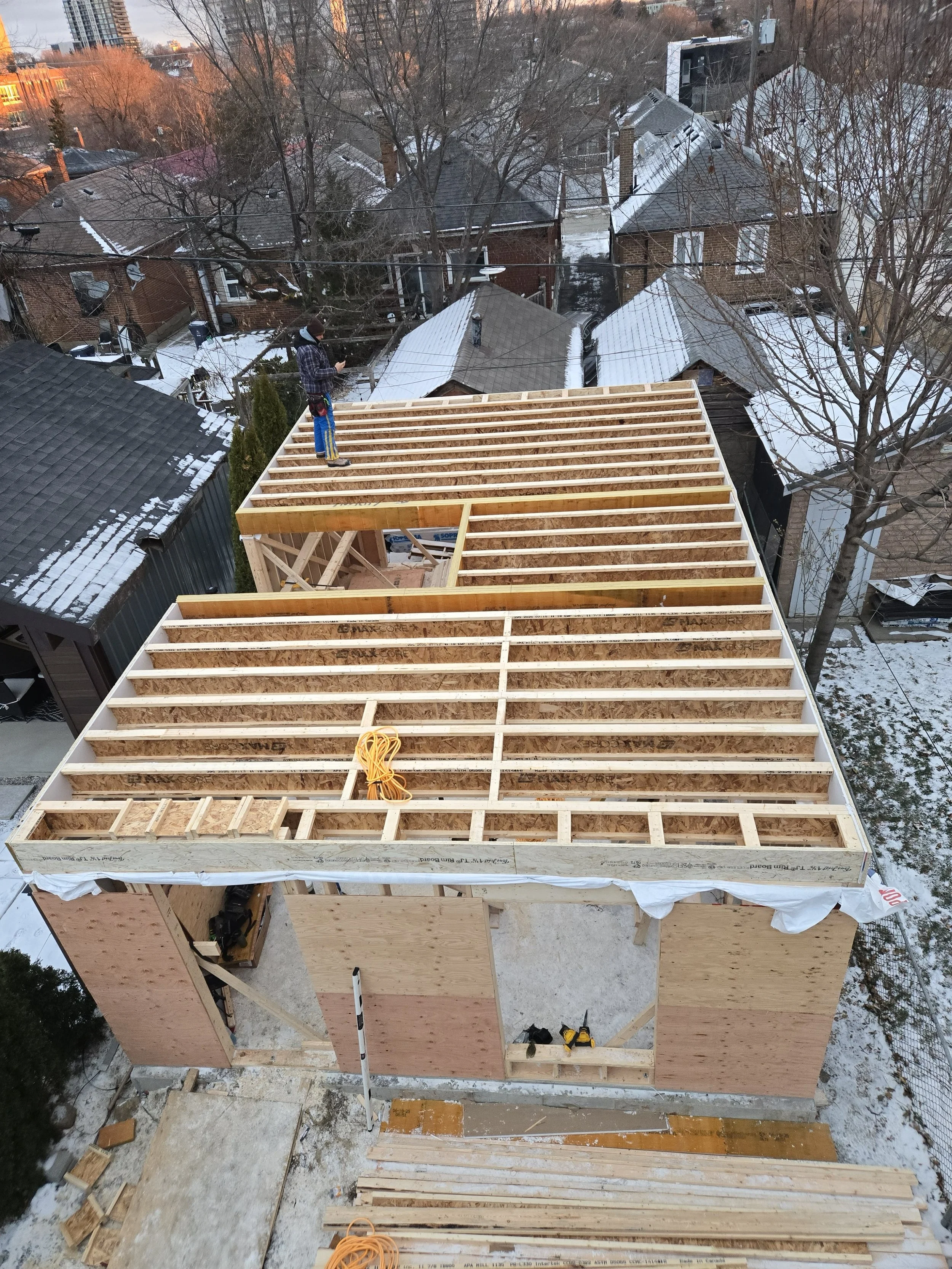
Floor framing: joists, beams, and structural subfloor systems
Roof framing: rafters, trusses, or engineered roof assemblies
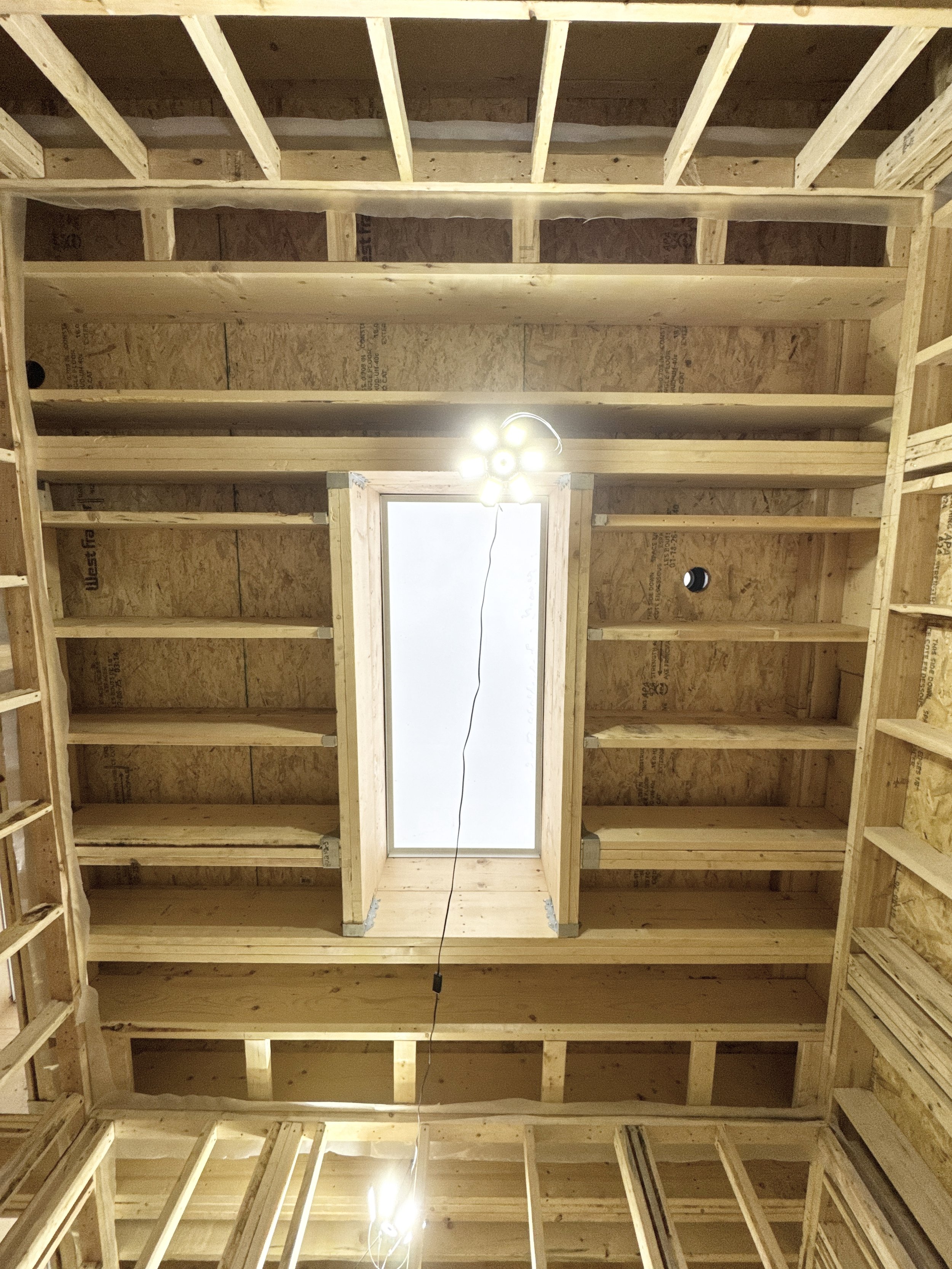
Opening framing: precisely sized headers for windows and doors
Framing contractors select materials, such as dimensional lumber, engineered wood products, or steel stud systems, based on the structural engineering drawings, design requirements, and project budget. Understanding which system to use and how to install it correctly is what separates professional framing companies from the rest.
Get Your Free Laneway Framing Estimate
Types of Laneway Framing Services
-
Wood Frame Laneway Suite Framing
Wood framing is the most widely used approach for laneway construction in Toronto and the GTA. It's versatile, cost-effective, and well-understood by local building inspectors. Platform framing — the standard method in Ontario residential construction — allows floor-by-floor construction that's efficient for both single and multi-storey laneway suites.
CanaStruct's crews work from your engineered drawings to install sill plates, stud walls, floor systems, and roof framing with accuracy. We follow fastener schedules, install proper blocking, and frame openings to the exact dimensions your trades need downstream.
Wood framing is the right choice for most laneway suites and offers the best balance of cost, speed, and constructability.
-
Steel Stud Framing for Laneway Suites
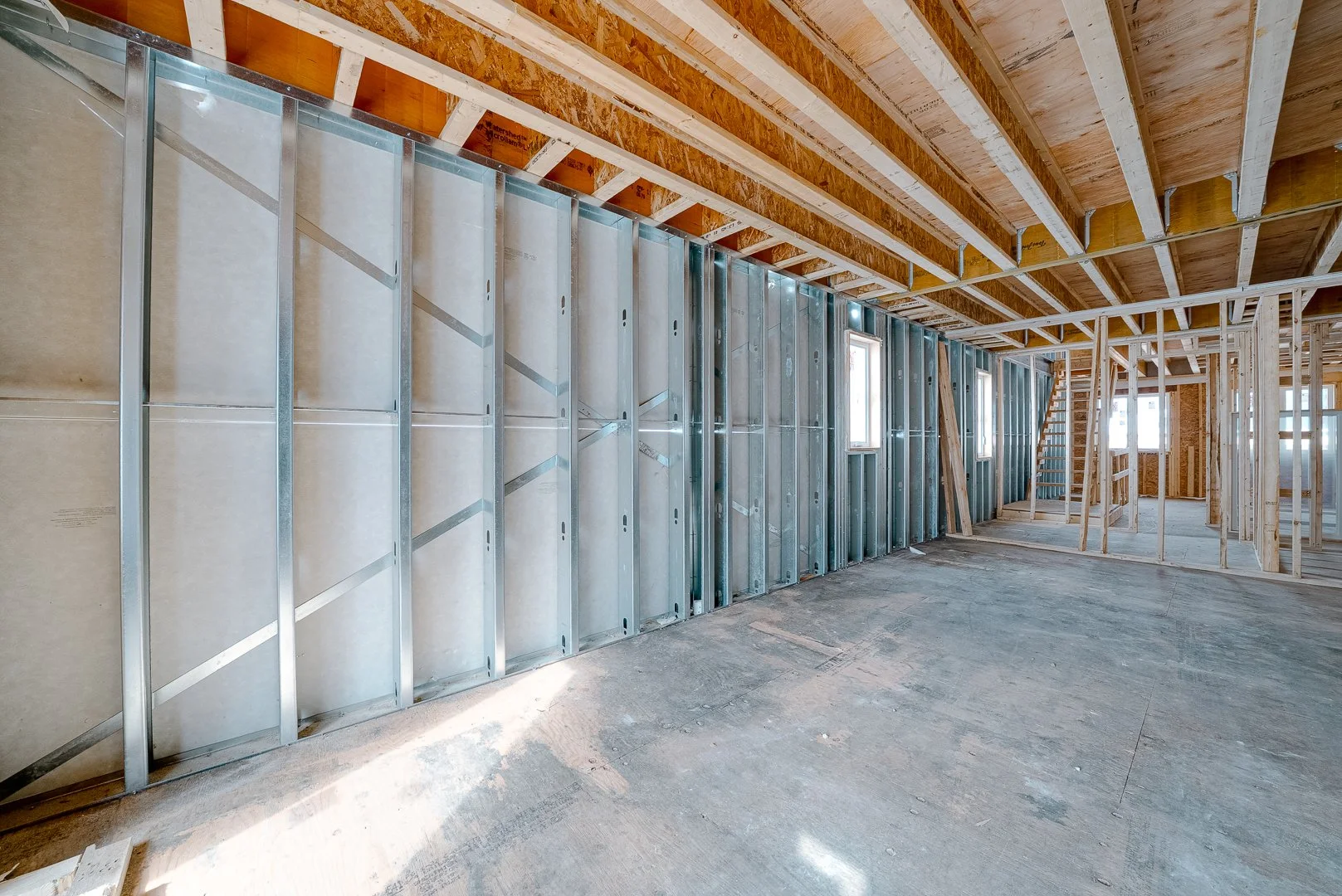
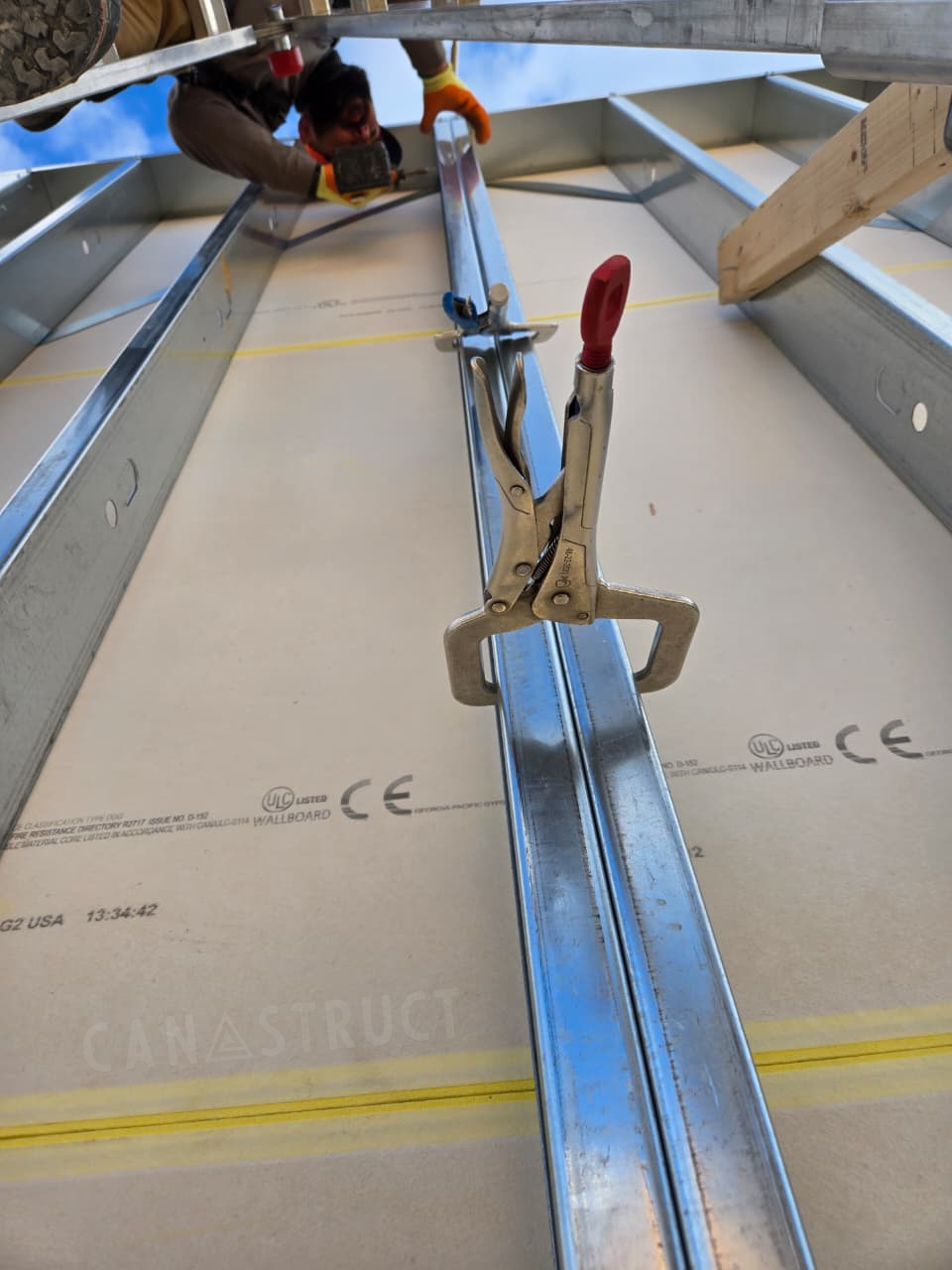
Steel stud framing is an increasingly popular choice for laneway construction — particularly when dimensional stability and long-term performance are priorities. Unlike wood, steel doesn't warp, shrink, or respond to seasonal moisture changes. The result is straighter walls, tighter tolerances, and a more predictable base for high-end finishes.
CanaStruct's steel framing contractors are experienced with both structural and non-structural steel stud systems. We work from engineer-stamped details and use manufacturer-specified connectors and fasteners throughout.
Steel stud framing is a strong fit for:
- Laneway suites with premium finish specifications
- Projects where moisture exposure or long-term settlement is a concern
- Structures requiring specific fire-resistance ratings -
Two-Storey and Rooftop Laneway Framing
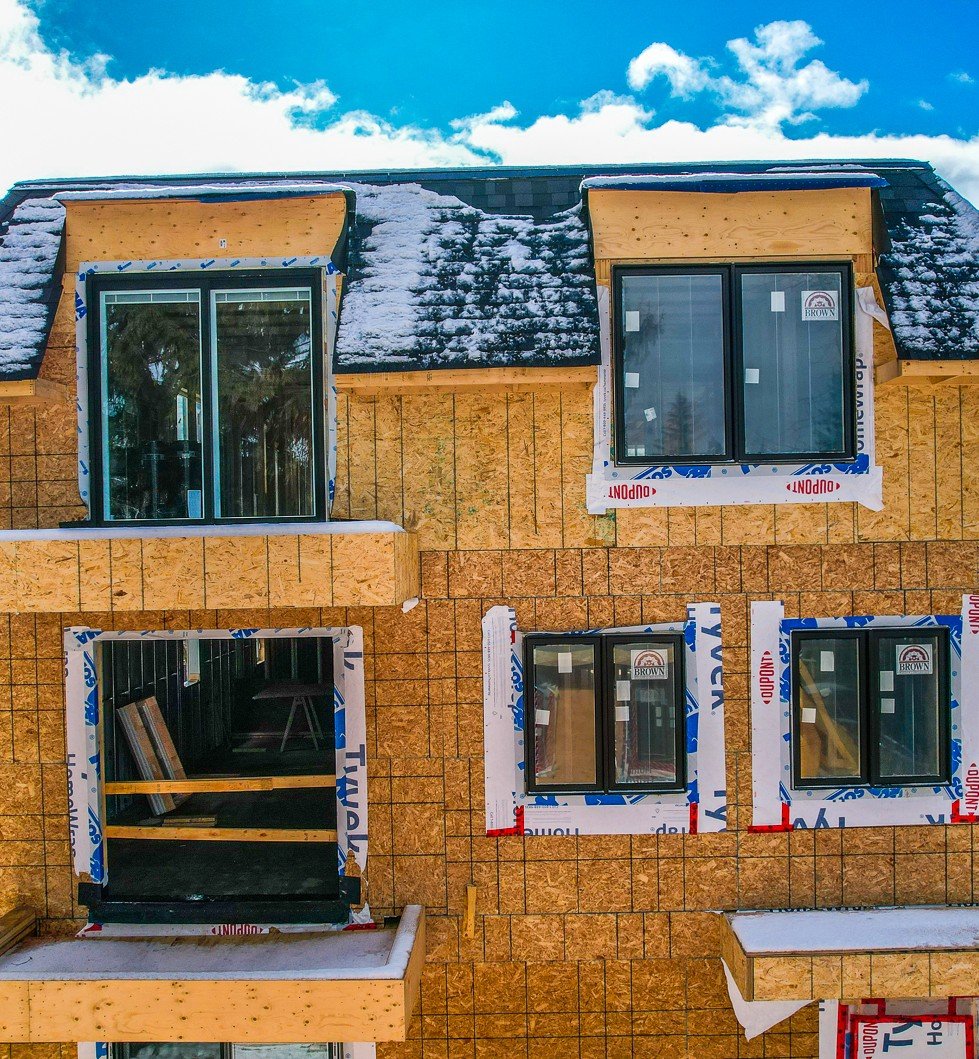
Many Toronto laneway suites are two storeys and some include rooftop terraces that require additional structural consideration. CanaStruct has specific experience with multi-storey laneway framing, including cantilevered sections, rooftop terrace decking framing, and the tight sequencing that multi-storey construction demands.
We work closely with your structural engineer to ensure every beam, post, and connection is executed as specified. Multi-storey laneway projects require framing contractors who understand load paths — CanaStruct does.
-
Hybrid Framing for Laneway Construction
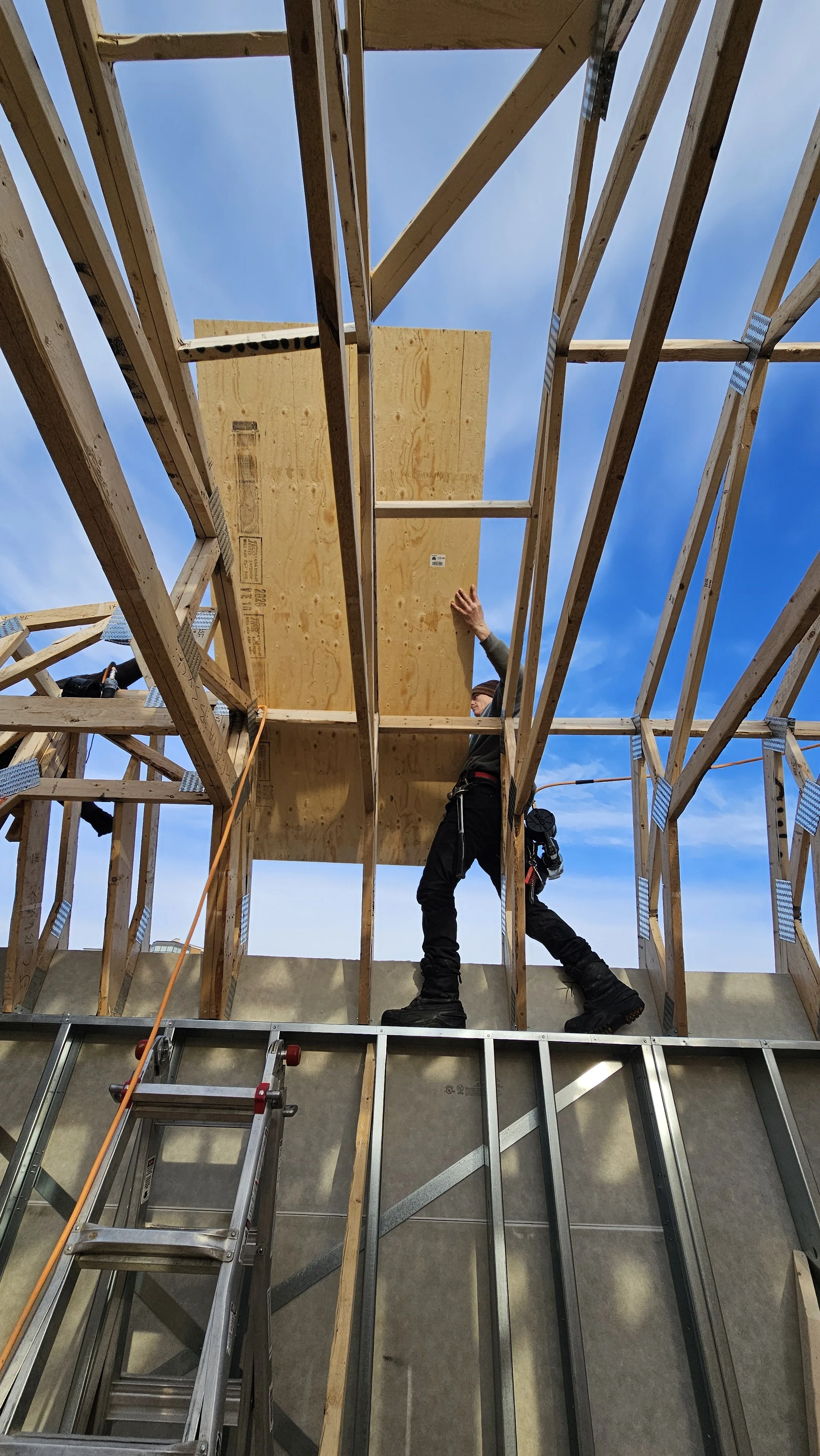
Some laneway suite projects call for a combination of structural systems — for example, a wood-framed primary structure with steel stud interior partitions, or engineered LVL beams integrated into a light-wood frame. CanaStruct has the expertise to execute hybrid systems cleanly, ensuring all transitions are properly detailed, structurally sound, and code-compliant.
Get a Free estimate for your project:
Site-Built Framing vs. Prefab / Modular Laneway Suites
Prefabricated laneway suites arrive partially or fully built and are craned onto your property. They're appealing in theory — faster installation, factory-controlled quality. In practice, they come with real trade-offs.
Prefab units have limited design flexibility, often command a significant price premium, and can face complications with lane access, crane logistics, and local permit requirements. Not every lot is suitable for prefab delivery.Site-built laneway framing by an experienced construction framing company like CanaStruct gives you full design freedom, easier permit navigation, and a structure engineered specifically for your soil conditions, setback requirements, and architectural vision.
Cost: Prefab laneway suites can run significantly higher than site-built alternatives when you factor in unit cost, delivery, crane rental, and foundation preparation. Site-built framing allows cost optimization at every stage.
Durability: Both approaches can be highly durable when executed properly. Site-built framing is designed and engineered for your specific project — not a standardized footprint.
ROI: A custom-framed laneway suite tailored to your neighbourhood and lot typically adds more appraised value than a prefab unit. Tenants and buyers respond to quality and design.
Laneway Framing vs. Alternatives
Wood Framing vs. Steel Stud Framing
Wood is faster to install in most configurations and is familiar to all trades. Steel stud systems offer superior dimensional stability and are preferred in high-moisture or high-finish applications. Both meet Ontario Building Code requirements. The right choice depends on your project specs, and CanaStruct gives you an honest recommendation based on your situation not an upsell.
Want to discuss?
How Laneway Framing Works
The Framing Sequence
Laneway framing begins once your foundation is complete, inspected, and signed off. A professional framing crew works from your architectural and structural drawings, translating engineering into a physical structure with precision.
The typical framing sequence for a laneway suite:
Sill plate installation and anchor bolt layout on the foundation
First-floor exterior and load-bearing wall framing
Floor system for second storey, joists, beams, rim boards, and subfloor sheathing
Second-floor wall framing
Roof framing, rafters, ridge beam, or pre-engineered truss installation
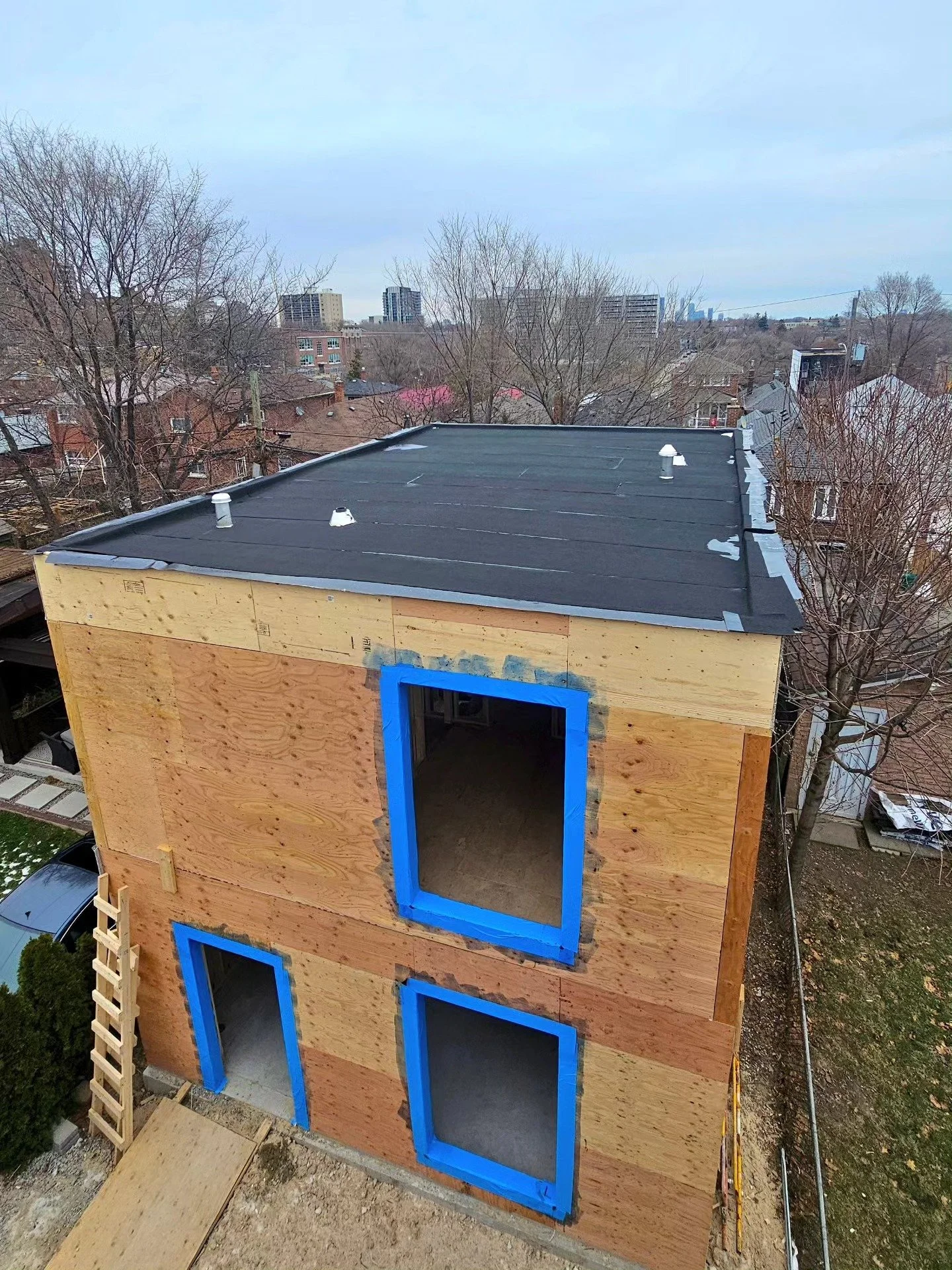
Roof and wall sheathing
Blocking, bridging, and hardware installation
Tools and Materials
Precision framing requires precision tools: laser levels, structural nailers, engineered joist hangers, hurricane ties, hold-downs, and LVL or steel beams where required. CanaStruct uses specified connectors from the structural drawings and doesn't substitute hardware without engineering sign-off.
Our Process
Step 1 — Initial Consultation
We start by understanding your project: the suite size, storey count, design intent, timeline, and budget. This conversation shapes everything that follows.
Step 2 — Site Assessment
Our team visits your property to review site conditions, foundation readiness, lane access, and any constraints that could affect framing scope or scheduling.
Step 3 — Detailed Estimate
You receive a clear, written estimate covering labour, materials, timeline, and any site-specific considerations. No vague line items.
Step 4 — Planning and Scheduling
We confirm your start date, review architectural and structural drawings, and coordinate with your general contractor, architect, or project manager.
Step 5 — Execution
Our framing crew arrives on schedule and works systematically through the framing sequence. We communicate daily, flag drawing conflicts before they become problems, and keep the site clean and organized.
Step 6 — Quality Check
Before calling for framing inspection, we conduct an internal review: plumb and level verification, fastener schedule compliance, structural connection confirmation. We catch our own issues before the inspector does.
Step 7 — Project Completion
Framing passes inspection. We close out our scope cleanly, and your project advances to the next phase with a solid structure underneath it.
Service Areas we Serve
CanaStruct Inc provides laneway framing services throughout the Greater Toronto Area. Our experienced framing crews are available in:
We currently serve:
Toronto (all neighbourhoods)
East York
Etobicoke
North York
Scarborough
Richmond Hill
Markham
Caledon
Mississauga
Oakville
From dense urban laneways in Toronto's east end to more spacious rear lots in Oakville or Caledon, CanaStruct brings the same precision and professionalism to every project.
Frequently Asked Questions
How much does laneway framing cost in Toronto?
Laneway framing costs depend on suite size, storey count, material selection, and site-specific conditions. For a typical single-storey laneway suite in Toronto, framing labour and materials typically range from $20,000 to $45,000+. A two-storey suite will be higher. CanaStruct provides detailed written estimates after a site review — contact us for accurate pricing on your specific project.
What's the difference between laneway framing and garden suite framing?
Laneway suites are accessed from a rear public lane. Garden suites are accessed from the primary lot and are typically positioned in the backyard. The framing process is similar for both — the key differences lie in siting, access logistics, and sometimes zoning requirements. CanaStruct has extensive experience with both laneway construction and garden suite construction across the GTA.
How long does laneway suite framing take?
Most laneway framing projects take between 7 and 15 working days, depending on the size and complexity of the structure. Two-storey suites take longer than single-storey builds. CanaStruct provides a realistic schedule with your estimate.
Do I need a permit for laneway framing in Toronto?
Yes. All laneway suite construction in Toronto requires a building permit, and framing inspections are mandatory at specific stages. CanaStruct frames to pass — we're familiar with Toronto and GTA inspection processes and work proactively with municipal inspectors.
What framing companies do laneway construction in Toronto?
CanaStruct Inc is a specialized framing company serving Toronto and the broader GTA — including East York, Etobicoke, North York, Scarborough, Mississauga, Oakville, Markham, Richmond Hill, and Caledon. We focus on residential framing with a specific emphasis on laneway and garden suite construction.
What is steel stud framing and is it suitable for laneway suites?
Steel stud framing uses cold-formed steel members instead of lumber. It's dimensionally stable, resistant to warping, and well-suited to high-finish applications. Steel stud systems can be used for load-bearing or non-load-bearing applications in laneway construction. CanaStruct's steel framing contractors work with both structural and partition steel systems.
Can I frame a laneway suite myself?
DIY framing for a permitted laneway suite is strongly discouraged. Most building permits require work to be performed by qualified contractors, and structural errors in framing are costly — and sometimes dangerous — to correct after the fact. Hiring professional framing contractors protects your investment and ensures your project passes inspection.
What is the difference between wood framing and steel stud framing for a laneway suite?
Wood framing is faster to install and familiar to all downstream trades. Steel stud framing offers greater dimensional stability and is preferred for certain finish specifications or moisture-sensitive applications. Both meet Ontario Building Code. CanaStruct recommends the best system for your project based on design, budget, and performance goals.
Does CanaStruct handle the full laneway construction project?
CanaStruct specializes in structural framing. We work as part of your broader project team — alongside your general contractor, architect, and other trades. Our focus on framing as a specialty, rather than general contracting, means our crews are true experts in this phase of construction.
GStart Your Laneway Suite Right — Contact CanaStruct Today
The quality of your laneway framing determines the quality of everything that follows. CanaStruct Inc brings specialized expertise, transparent communication, and consistent execution to every laneway framing project across Toronto, East York, Etobicoke, North York, Scarborough, Mississauga, Oakville, Markham, Richmond Hill, and Caledon.
If you want framing contractors who specialize in laneway construction, who read drawings accurately, who show up on schedule, and who build structures that pass inspection and support a quality finish — we're ready to talk.
Scheduling fills up quickly, especially through spring and summer. Request your free estimate now and let's get your laneway framing locked in.