Framing in Winter in Toronto: Cold Temperatures, Warm Confidence
It's January. Your build is scheduled. The thermometer reads -18°C. Your neighbour, the one who once watched a YouTube video about construction, tells you over the fence that you should wait until spring.
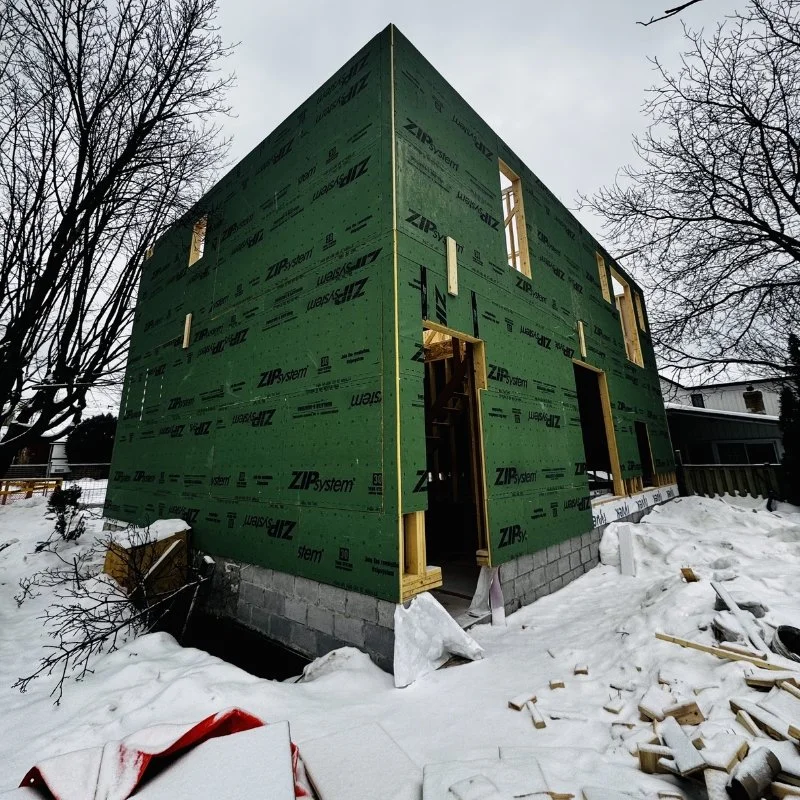
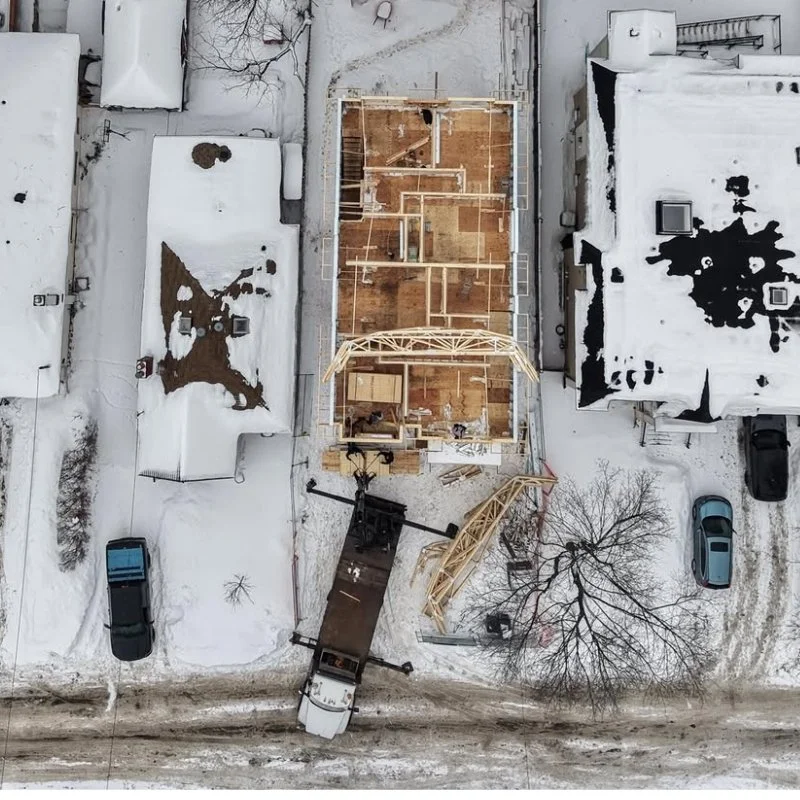
Here's our honest answer, from people who have been framing homes in Toronto for years: you don't need to wait. Winter framing in the GTA is not only possible, but it's done constantly, professionally, and without compromising your structure. This post covers everything we get asked about cold-weather framing, and we're not going to dress it up.
Framing in Winter in Toronto
Is It Actually Safe to Frame in -20°C Weather?
Yes. Full stop.
Building through Canadian winters isn't some bold new experiment. It's been standard practice across Ontario for decades. Toronto doesn't pause construction from November to March — and it never has. Developers, custom home builders, and framing crews work through the cold every single year, and the buildings they put up are standing just fine.
The Ontario Building Code doesn't prohibit winter construction. What it does require and what we take seriously is that materials are handled and installed correctly, given the conditions. That's a process issue, not a temperature issue. And the process is something we control.
Won't the cold affect the structural integrity of the frame?
No. Lumber doesn't become fragile at -20°C. Dimensional lumber, the SPF (Spruce-Pine-Fir) we use for most residential framing, is graded and certified to be used in Canadian climate conditions, including exposure to cold and moisture during construction. The structure of your home isn't weakened by a cold framing phase; it's determined by proper installation, correct fastening, and accurate layout. None of those things requires warm weather.
Framing in Winter in Toronto
Can Lumber Actually Handle a Toronto Winter?
This is one of the most common questions we get, and the answer is simpler than people expect: yes, because it was designed to.
SPF lumber, the standard material for residential wood framing in Ontario, is sourced almost entirely from Canadian forests. It grows in the same climate it gets built in. It's been certified by NLGA (National Lumber Grades Authority) to perform under Canadian conditions. You're not importing fragile tropical wood and asking it to survive a Toronto January. You're using Canadian material in a Canadian climate.
What about engineered wood products?
LVL beams, I-joists, and engineered lumber are manufactured with adhesives rated for exposure to moisture during construction. They're not meant to sit in a puddle for six months, but a framing phase in winter, properly managed, isn't a problem for these materials. We use them regularly in winter builds without issue.
What about steel stud framing?
Steel doesn't care about temperature in the way wood does. It doesn't absorb moisture, doesn't expand or contract meaningfully in the range of temperatures we see in Toronto, and doesn't need to be "dried in" before winter. If you're building a commercial space or a multiplex with steel stud interior framing, cold weather is even less of a concern. We cover the differences between these materials in more detail in our lumber vs. steel stud framing guide.
What about moisture? Won't snow and ice damage the lumber before it's dried in?
Moisture exposure during framing is real, and it's something we manage, not something we ignore. Here's how:
Lumber that gets wet and then is properly dried before enclosure performs fine. The keyword is "properly." We don't seal wet lumber inside walls.
Snow sitting on a lumber stack overnight is not the same as a flood. Surface moisture, especially in freezing temperatures, doesn't penetrate wood the same way warm rain does.
Scheduling matters. We plan the framing sequence and drying-in timeline with winter conditions in mind. The goal is always to get the building weather-tight as quickly as possible — and that's true in July too.
Material storage on site is handled intentionally, lumber is covered and elevated off the ground, and rotated in as needed.
So, How Do You Actually Manage It?
This is where experience matters more than equipment. The things that make winter framing go smoothly aren't magic; they're planning, sequencing, and knowing the job.
We schedule for the conditions, not against them
We know Toronto winters. We know when the big cold snaps tend to hit, how long they last, and how to sequence a frame so the most weather-sensitive parts aren't exposed during the worst windows. This isn't guesswork; it's experience on GTA job sites over many years.
Concrete and foundations: that's where the real winter rules apply
Pouring concrete in freezing temperatures does require active measures: heated enclosures, insulated blankets, and admixtures. Framing is a different story. Once your foundation is set and cured, which your concrete crew handles before we show up, we're working with wood and steel, neither of which needs a heated environment to be installed correctly.
Crew preparation is non-negotiable
Our farmers work through winter. They're dressed for it, paced for it, and experienced in it. Cold weather slows people down? That's human biology. We account for that in how we schedule the crew and structure the day. What we don't do is send people onto a site unprepared and then wonder why the work suffers.
There's no such thing as bad weather — only a bad plan.
Every winter framing project we take on starts with a detailed conversation about the site, the schedule, and the conditions. If we think something needs to be adjusted, we'll tell you upfront, not halfway through.
The Part Nobody Talks About: Winter Framing Can Cost You Less
Here's something worth knowing: the framing industry, like most of residential construction, has a peak season. Spring and summer are when everyone wants to build. Crews are booked out, lead times stretch, and contractors fairly charge accordingly.
In winter, that pressure eases. More framing contractors have availability. Scheduling is more flexible. Material suppliers aren't stretched thin. If you're willing to build in January or February, you're operating in a buyer's market and that can translate into better pricing, faster scheduling, and more attention from the crew you hire, because you're not one of fifteen projects competing for the same team.
We're not going to promise you a specific discount, pricing depends on the project, the scope, and what's going on in the market at any given time. But if you ask us whether winter is a good time to lock in a framing crew? Honestly, yes. It often is.
Will a winter frame take longer than a summer frame?
Marginally, sometimes, but not in a way that should drive your decision. On a very cold day, the crew works a bit slower. There are occasional weather days. But these are small variables against the bigger picture of your build schedule, and they're built into our project timelines from the start. A winter frame on a 2,500 sq ft custom home might take a day or two longer than the same job in July. It's not a deal-breaker and for most homeowners, the scheduling and pricing advantages far outweigh the minor difference.
Planning a build this winter in Toronto or the GTA?
We're happy to talk through your project, the timeline, the site conditions, what the framing phase looks like, and what it'll cost. No sales pitch. Just a straight conversation with people who've framed through a lot of January mornings.
Reach us at (647) 641-0550 or send us a message.