Prefab Framing Kits: Are They Worth It for Your Toronto Build?
Somewhere between the truss delivery truck and the third day of rain that just pushed your schedule back, someone on site mentions prefab framing kits — pre-engineered, pre-cut wall panels and components that arrive ready to stand. You've maybe heard of them. Maybe dismissed them as too expensive, or too rigid, or something that only makes sense for cookie-cutter subdivision homes.
We're going to push back on that a little. Prefab framing isn't right for every project. But for the right one, it's not just faster — it's genuinely smarter. And in a Toronto winter, it can be the difference between a build that moves and one that stalls.
Here's the honest version of the conversation.
What Are We Actually Talking About?
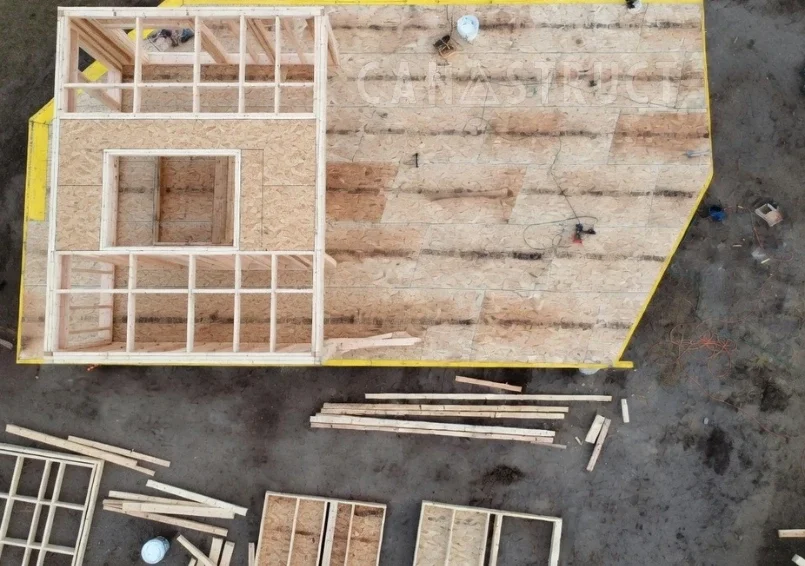
"Prefab framing" covers a range of approaches, and it's worth being specific because the term gets used loosely. The spectrum runs from something most Toronto builders already use, to fully engineered panel systems.
The Prefab SpectrumFrom common practice to full kit systems
Engineered Roof Trusses: Factory-manufactured, delivered ready to install. Most GTA residential builds already use these. If you've built with trusses, you've already used prefab.
Panelized Wall Framing: Pre-built wall panels to your exact dimensions — exterior walls, partitions, floor cassettes — arriving pre-framed, pre-sheathed, sometimes pre-insulated.
Full Structural Framing Kits: Walls, floors, and roof components engineered as a complete system and delivered in a coordinated sequence for rapid assembly on a prepared foundation.
Quick distinction: Prefab framing is not a modular or manufactured home. You're not buying a pre-built house. You're buying pre-engineered structural components, the same design, the same materials, the same OBC compliance — just built in a factory instead of on your lot.
The Winter Case for Prefab
We've written before about why framing in winter in Toronto is entirely viable. But if there's one scenario where prefab framing shifts from "a good option" to "a genuinely compelling one," it's a winter build — and here's the exact reason why.
Every day a house is open to the elements is a day you're managing weather risk. Rain gets into subfloors. Snow sits on lumber. Wind delays crane picks. In a Toronto February, the difference between a two-week frame and a four-week frame isn't just time — it's prolonged exposure, added moisture management work, and more weather windows you need to plan around.
Build timeline to weather-tight — Toronto winter scenario (2,500 sq ft custom home)
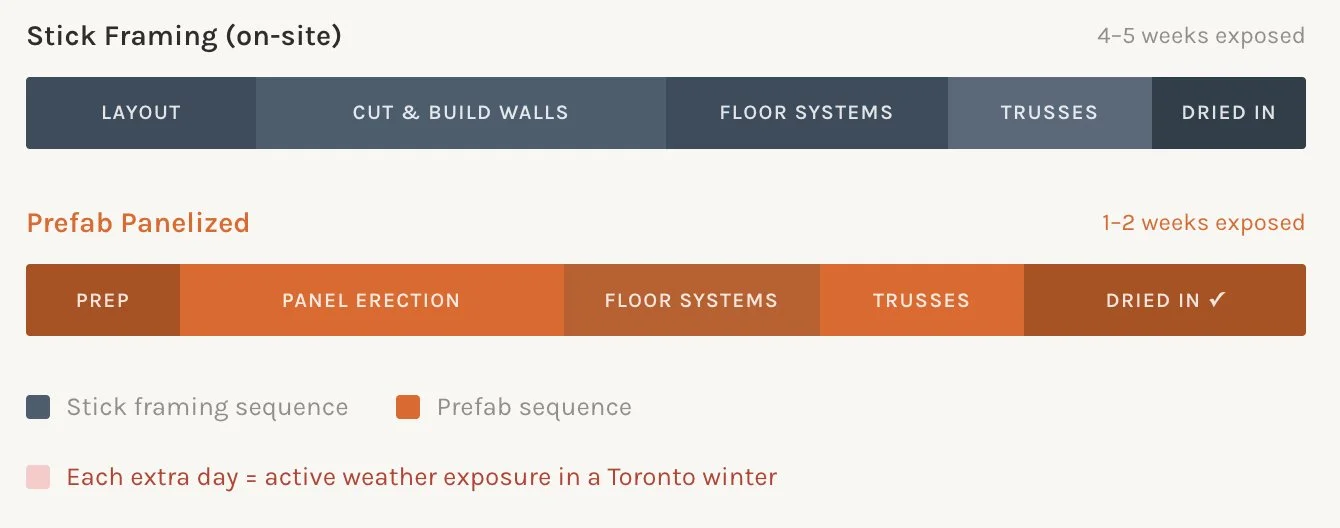
Speed is weather protection. Full stop.
In summer, a slower frame is an inconvenience. In a Toronto January, every extra week of open structure is a week of active weather risk management. Getting the building closed faster isn't just efficient — it's the whole winter framing strategy.
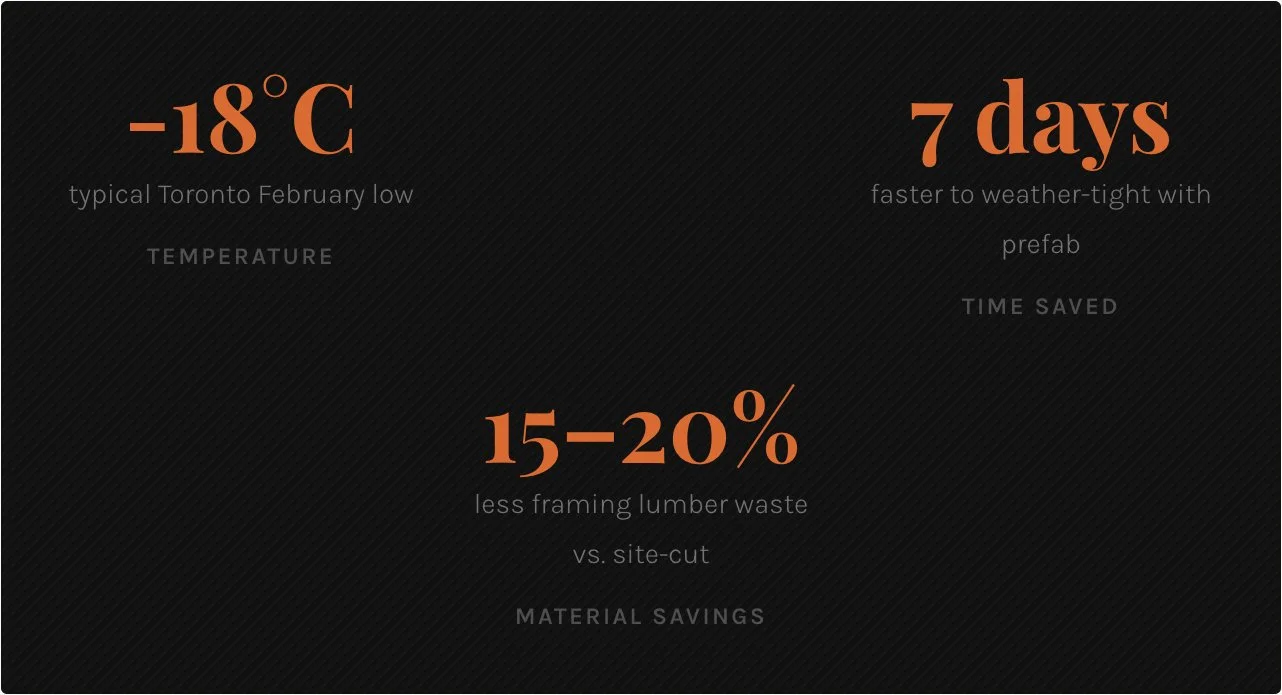
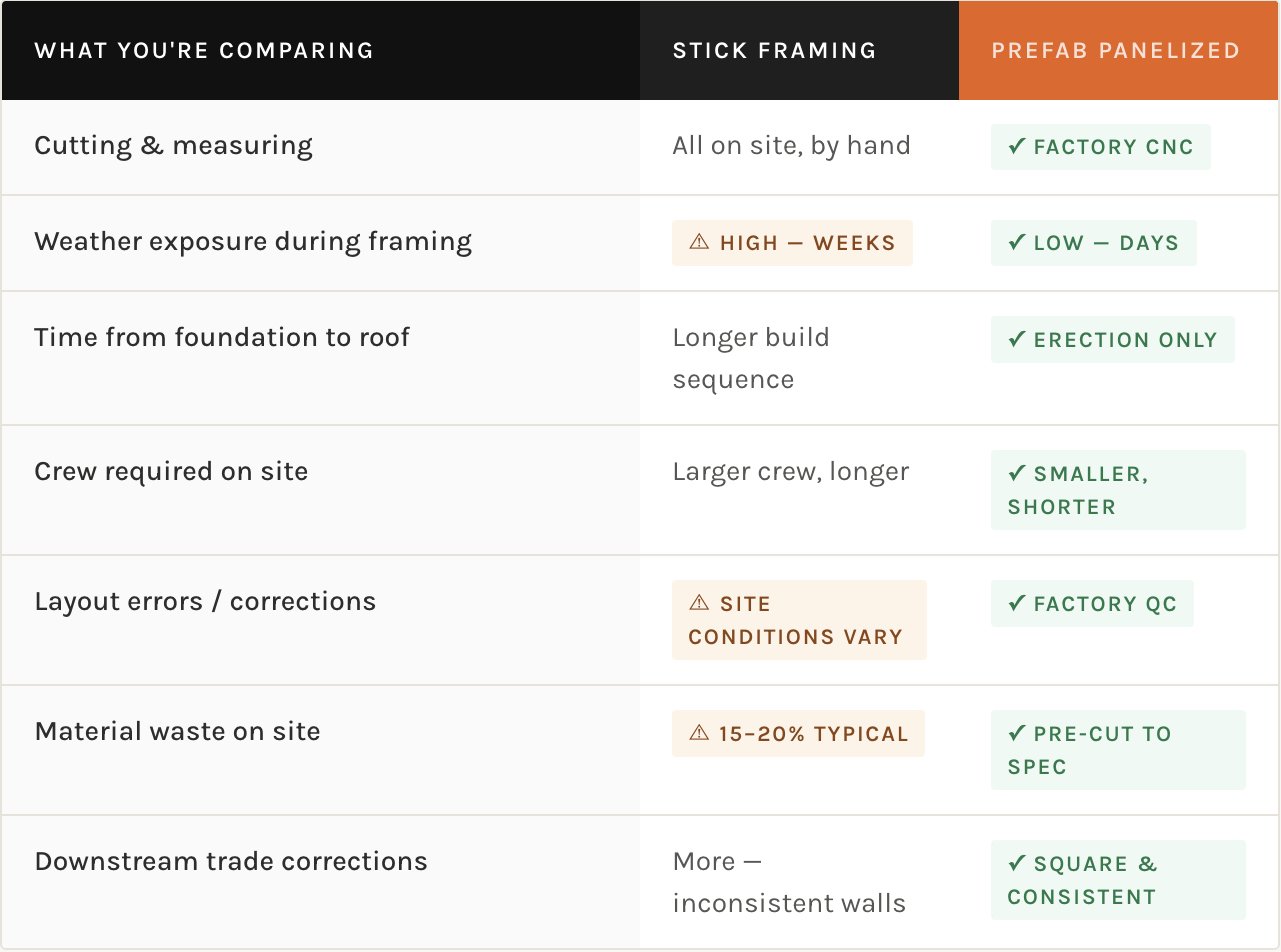
There's also a precision argument specific to cold weather. Factory-cut panels are built in a climate-controlled environment. No frozen fingers making a hurried measurement. No lumber that moved overnight because the site temperature swung 20 degrees. When panels arrive on site, they're already square, already consistent. The framing crew's job is to stand them plumb and connect them — not to chase layout errors caused by conditions on the ground.
Quality Framing Is Fast Framing
corners. Take your time and you do it right. We'd argue that framing is one of the few trades where that logic is backwards — at least partly.
A frame that goes up quickly and gets dried in fast is a better frame than one that sits exposed for an extra three weeks while the crew deals with weather delays, resequencing, and material that's been rained on twice. Quality isn't just about the precision of your cuts. It's about getting the structure protected before conditions can compromise it.
Panelized walls built in a factory are cut to exact tolerances on CNC equipment. Every stud is the right length. Every header is pre-installed. There's no site variability. When you put that panel up and it's plumb and square, it stays that way — because it was built that way before it arrived.
The Financial Picture
We said we'd give you the honest version, so here it is: prefab framing kits cost more upfront. That's real, and we're not going to pretend otherwise. Factory manufacturing, engineering fees, transport, and crane costs all add to the material bill. Depending on the project and supplier, you might be looking at a 10–20% premium on framing material costs.
But that's the beginning of the financial story, not the end of it.
Where the money actually moves — prefab vs. stick framing (net impact)
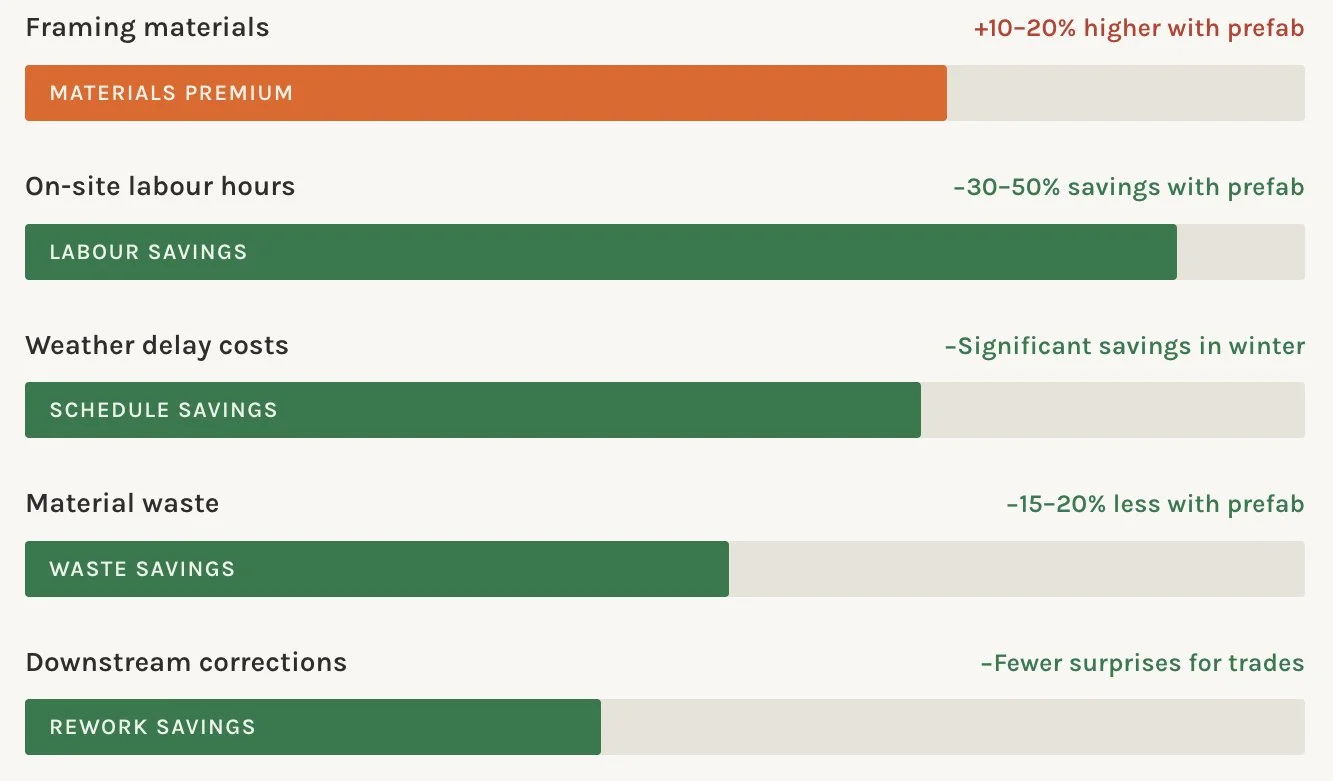
The number that matters isn't framing material cost. It's total project cost.
When you factor in saved labour, fewer weather delays, reduced waste, and a compressed schedule, prefab framing can come out ahead on total cost — even when the materials cost more. The math depends on the project. But it's a real math conversation, not a foregone conclusion.
When Prefab Framing Makes Sense
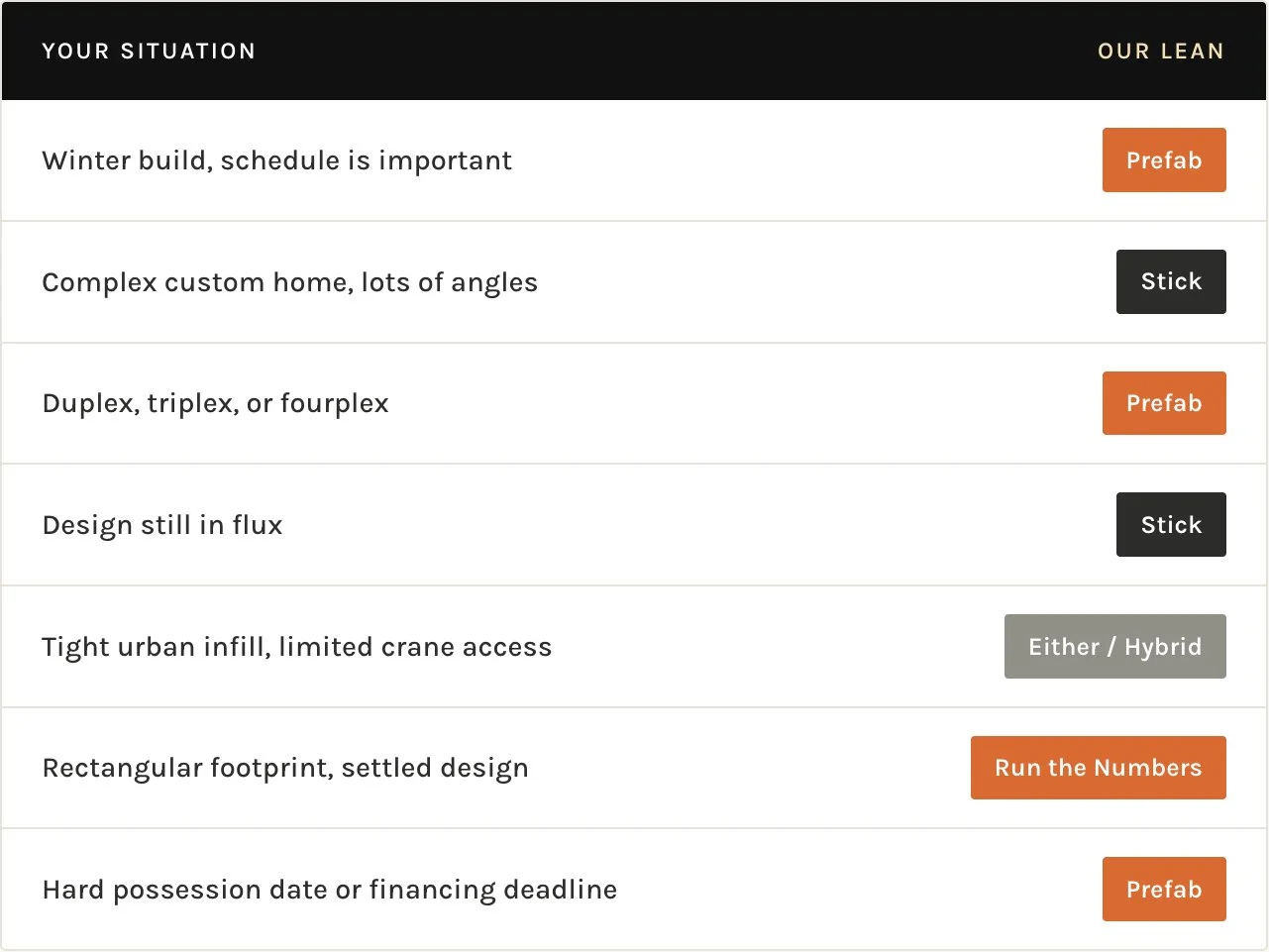
We're not here to sell you on prefab framing for every project. It's a tool, and like any tool it's better suited to some jobs than others. Here's our honest read.
Prefab framing works well when
The design is settled. Panelized framing requires drawings finalized before manufacturing. Layout locked in, engineer signed off — prefab is a natural fit.
You're building in winter. The compressed erection timeline is the strongest argument for prefab in a GTA winter. The faster your structure closes, the better.
The floor plan has repeating elements. Rectangular footprints, consistent ceiling heights, regular stud layouts — ideal factory conditions.
Schedule is a hard constraint. Firm possession date, tenancy commitment, financing deadline — prefab's predictability has real dollar value.
You're building a multiplex. Duplex, triplex, fourplex — where the same wall configurations repeat across units and factory cost per panel drops with volume.
Stick framing is still the right call when
The design is complex or irregular. Curved walls, dramatic roof lines, unusual ceiling heights, lots of custom angles — stick framing's flexibility is unmatched.
You're mid-project and changes are likely. Stick framing absorbs client-driven changes gracefully. Changing a panelized order in production is expensive and slow.
Access to the site is constrained. Panel delivery needs space — a truck, often a crane. Tight urban infill sites can complicate the logistics enough to erase the time savings.
Budget is the primary driver and timeline is flexible. If you have no schedule pressure and can get your framing crew for longer, stick framing's lower material cost may win.
How We Think About It on Our Builds
We work with both methods, depending on the project. We don't have a stake in steering you toward one or the other — what we care about is that the structure goes up right, goes up fast, and doesn't create problems for the trades that follow.
What we've seen on GTA job sites is that prefab framing gets dismissed too quickly because of the upfront cost conversation, and that's usually a mistake. The material premium is real, but it's almost always at least partially offset by labour and schedule savings. On a winter build especially, we think the case for panelized framing deserves a serious look from the start — not as a last resort when the schedule is already slipping.
We've also seen prefab framing pushed on projects where it wasn't the right fit — complex designs, constrained sites, budgets that couldn't absorb the material cost even with the offsets. The method isn't magic. A good framing crew doing stick framing to a high standard will always beat prefab done without proper coordination.
If you're weighing up framing methods for a build in the GTA, we're happy to walk through the specifics. We cover the cost side in more detail in our structural framing cost guide, and if you're thinking about a winter start, our winter framing post covers how we manage the process from the ground up.
Questions We Get Asked
Can prefab framing meet the Ontario Building Code?
Yes. Panelized framing systems used in Ontario are engineered to OBC standards. Because they're produced in a factory under a quality management system, the structural documentation is often more thorough than a site-cut frame. The engineer's drawings and stamped design come with the package. That said, installation still needs to be done correctly — factory precision at the panel level doesn't compensate for poor erection practice on site.
How far in advance do I need to order prefab panels?
Lead times vary by supplier and season, but 4–8 weeks from finalized drawings is typical for residential panelized framing in Ontario. This is one reason why having your design locked before you commit to a prefab approach matters — you can't order panels against drawings that are still changing. For winter builds, ordering in late fall for a January or February start is good planning. Don't leave this conversation until your foundation is poured.
Do I need a crane for prefab wall panels?
For full-height exterior wall panels on a two-storey home, yes — crane time is typically required for erection. This is a real cost to factor in: crane rental and operator in the GTA runs roughly $1,500–$3,000 per day depending on size and setup. For smaller panels or single-storey builds, some systems can be walked up by crew without crane assistance. This is a project-specific conversation worth having with your supplier before you commit.
Does prefab framing make electrical, plumbing, and HVAC rough-ins harder?
Not in any significant way. Panelized framing arrives with stud bays open and plumbing/electrical chase locations can be specified at the design stage. The rough-in trades work through prefab framing the same way they work through stick framing — they drill, notch, and run their work through framed cavities. Some panel systems come with pre-drilled utility chases, which can actually save the electrician time. Loop in your mechanical trades at the design stage so chase requirements are incorporated before panels go into production.
Is prefab framing better for energy efficiency?
Factory-built panels are consistently more airtight than site-built walls — the tolerances are tighter and there's less variability. Better airtightness means better energy performance and less uncontrolled air leakage through the building envelope. Some panelized systems can also incorporate continuous exterior insulation or pre-installed sheathing products like ZIP System that further improve the thermal envelope. If energy code compliance is a priority, prefab framing is worth exploring with your designer and energy advisor.
Related Reading
Framing in Winter in Toronto: Cold Temperatures, Warm Confidence: the full case for building through a Toronto winter, and how we manage it
Cost of Structural Framing in House Construction: what framing a home in Toronto actually costs, broken down
Framing with Conventional Lumber vs Steel Studs: a material-level comparison relevant to any framing method discussion
Framing Rental Triplex, Fourplex vs Framing a Regular House: where prefab framing often makes the strongest financial case
ZIP R System: sheathing and insulation technology that pairs well with panelized framing
Thinking through framing options for your Toronto or GTA build?
Whether you're leaning toward prefab, stick framing, or somewhere in between, we're happy to work through the specifics with you. Bring us your drawings, your timeline, and your budget constraints — and we'll give you a straight read on what makes sense for your project.
Call us at (647) 641-0550 or get in touch online. We can have a honest conversation as we built both ways.