
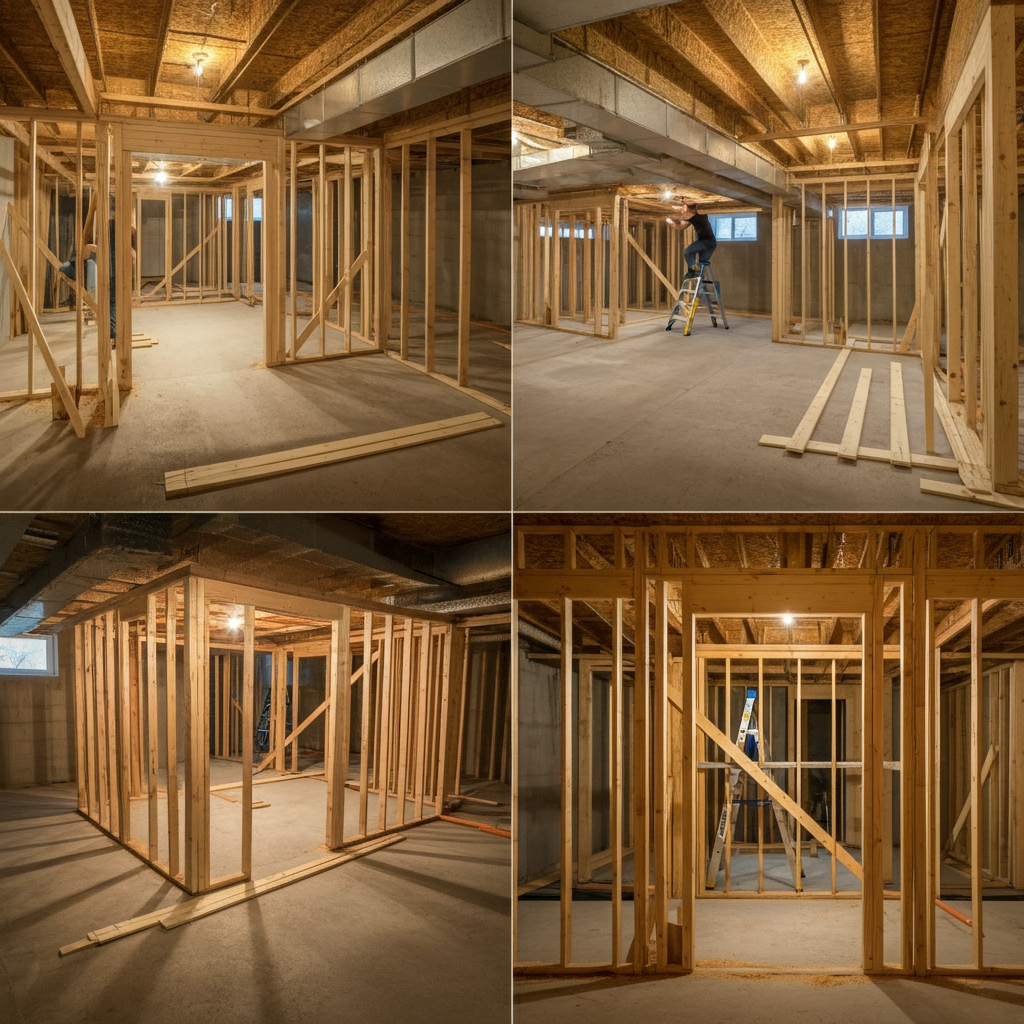
Basement Framing in Toronto
CanaStruct Inc. specializes in basement framing across Toronto and the GTA. Whether you're finishing an unfinished basement, converting a utility space into a legal suite, or building out a multiplex lower level, our framing contractors deliver precise, code-compliant results on time.
Expert basement framing contractors serving Toronto and the full GTA
Wood and steel stud framing for finished basements, in-law suites, and rental units
Ontario Building Code compliant work — ready for inspection at every stage
Detailed estimates with no hidden costs or surprise scope changes
Proven track record across Toronto, Scarborough, Mississauga, Markham, and beyond
build@canastruct.ca
What Is Basement Framing?
Basement framing is the process of building the interior wall structure of a basement using dimensional lumber or steel studs. It transforms an open concrete shell into a livable, functional space by creating the framework for insulation, electrical, plumbing, drywall, and finished surfaces.
In Toronto, basement framing is most commonly required for three types of projects: finishing an unfinished basement for personal use, converting a basement into a legal secondary suite or rental apartment, and framing the lower level of a new multiplex or custom home build.
Basement framing involves more than just stacking studs. A proper frame accounts for the structural beams and columns in the space, moisture barriers, fire-rated assemblies for rental units, and coordination with mechanical trades. That's why hiring experienced framing contractors — rather than attempting a DIY frame — is critical for both quality and code compliance.
Related terms you may encounter when researching this work include: steel stud framing, structural framing, framing contractors, framing companies, steel framing contractors, and construction framing contractors.
How Basement Framing Works
A basement framing project begins with a review of your architectural drawings or layout plan. CanaStruct's lead framer surveys the space to identify beam and column locations, mechanical rough-ins, window and door openings, and any existing conditions that affect the layout.
From there, we snap chalk lines on the concrete floor to establish wall positions, then install pressure-treated bottom plates (required wherever wood contacts concrete) and fasten top plates to the floor joists above. Studs — either 2x4, 2x6, or steel gauge, depending on spec — are cut and set at 16 or 24 inches on centre as required.
Bulkheads are built around ductwork and beams, headers are framed over door openings, and any required fire-rated assemblies are built with the correct stud spacing and framing details. We also rough-frame egress window openings and stairwell enclosures where applicable.

Types of Basement Framing Services We Offer
-
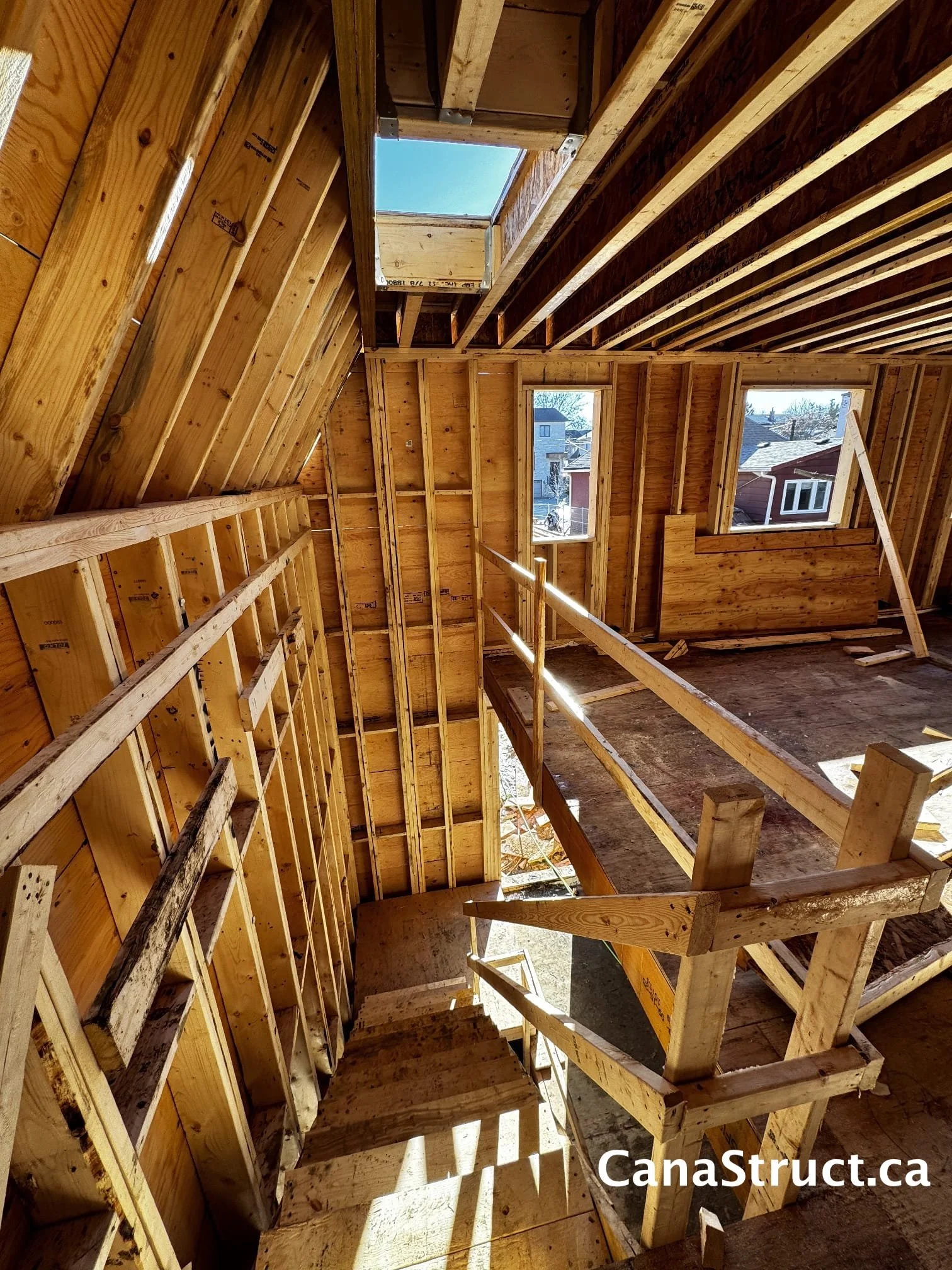
Finished Basement Framing
Turning an unfinished basement into a
- Home gym
- Family room
- Home office
- Entertainment spaceStarts with framing. CanaStruct frames interior partition walls, bulkheads around ductwork and beams, and furring along foundation walls — giving every subsequent trade a clean, square surface to work with.
We coordinate with your electrician, plumber, and HVAC contractor to ensure all rough-in locations are framed correctly before drywall goes up. Good framing at this stage saves expensive callbacks later.
-
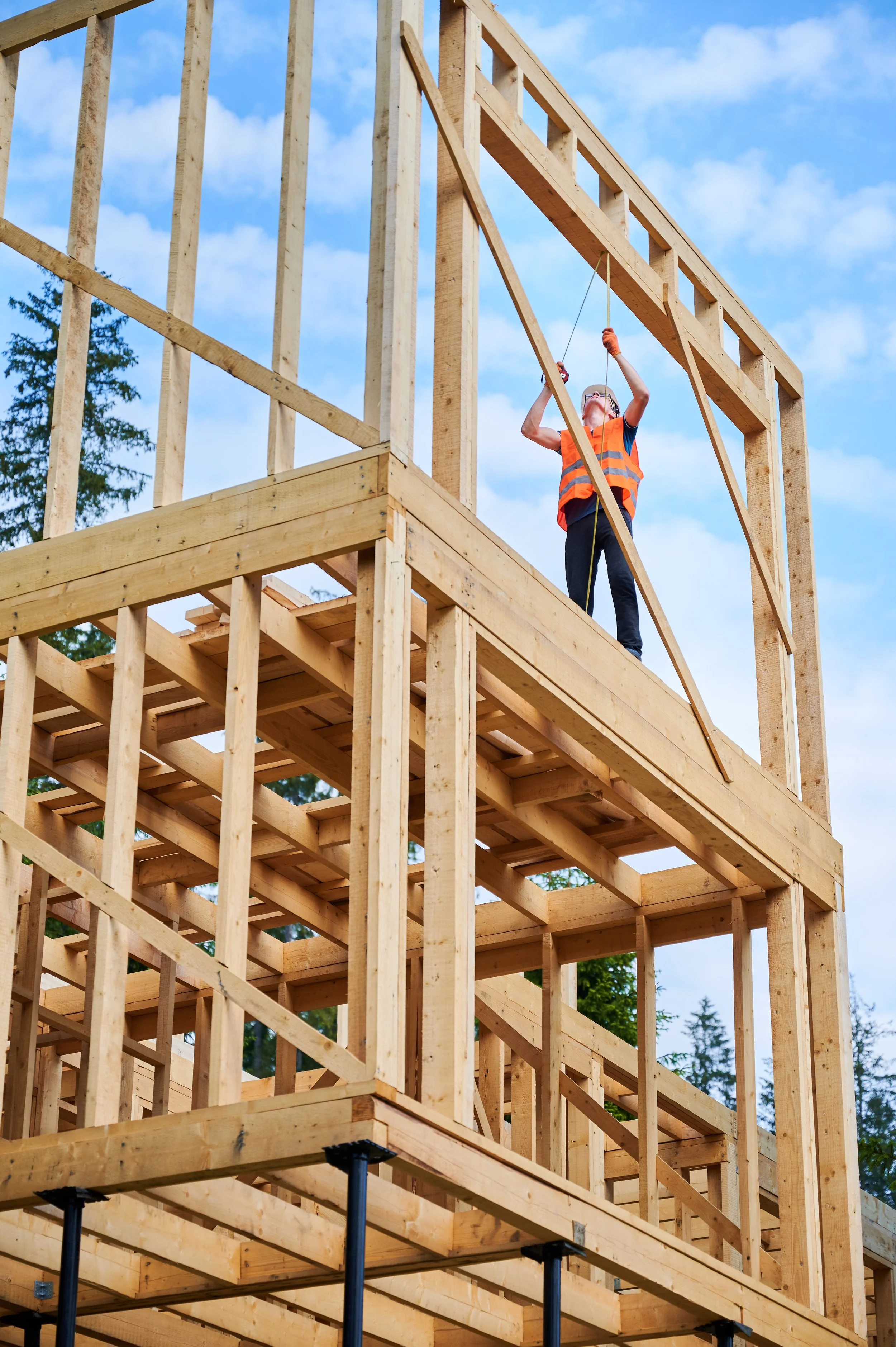
Basement Apartment and Legal Suite Framing
Creating a legal basement apartment in Toronto requires framing that meets specific fire separation, egress, and sound attenuation requirements under the Ontario Building Code.
CanaStruct's construction framing contractors understand these requirements and build basement suite frames that pass inspection the first time.
We frame bedroom walls, bathroom enclosures, utility room separations, and the critical fire-rated assembly between the basement unit and the floor above using the correct materials and techniques to meet City of Toronto standards.
-
Steel Stud Framing for Basements
Steel stud framing is an excellent choice for basement applications. Unlike wood, steel studs won't absorb moisture, warp, or support mold growth, a significant advantage in below-grade environments where humidity can fluctuate.
Our steel framing contractors install light-gauge steel stud systems for both load-bearing partitions and non-structural interior walls. Steel framing delivers straight, dimensionally consistent walls that simplify drywall installation and produce a cleaner finished result.
-
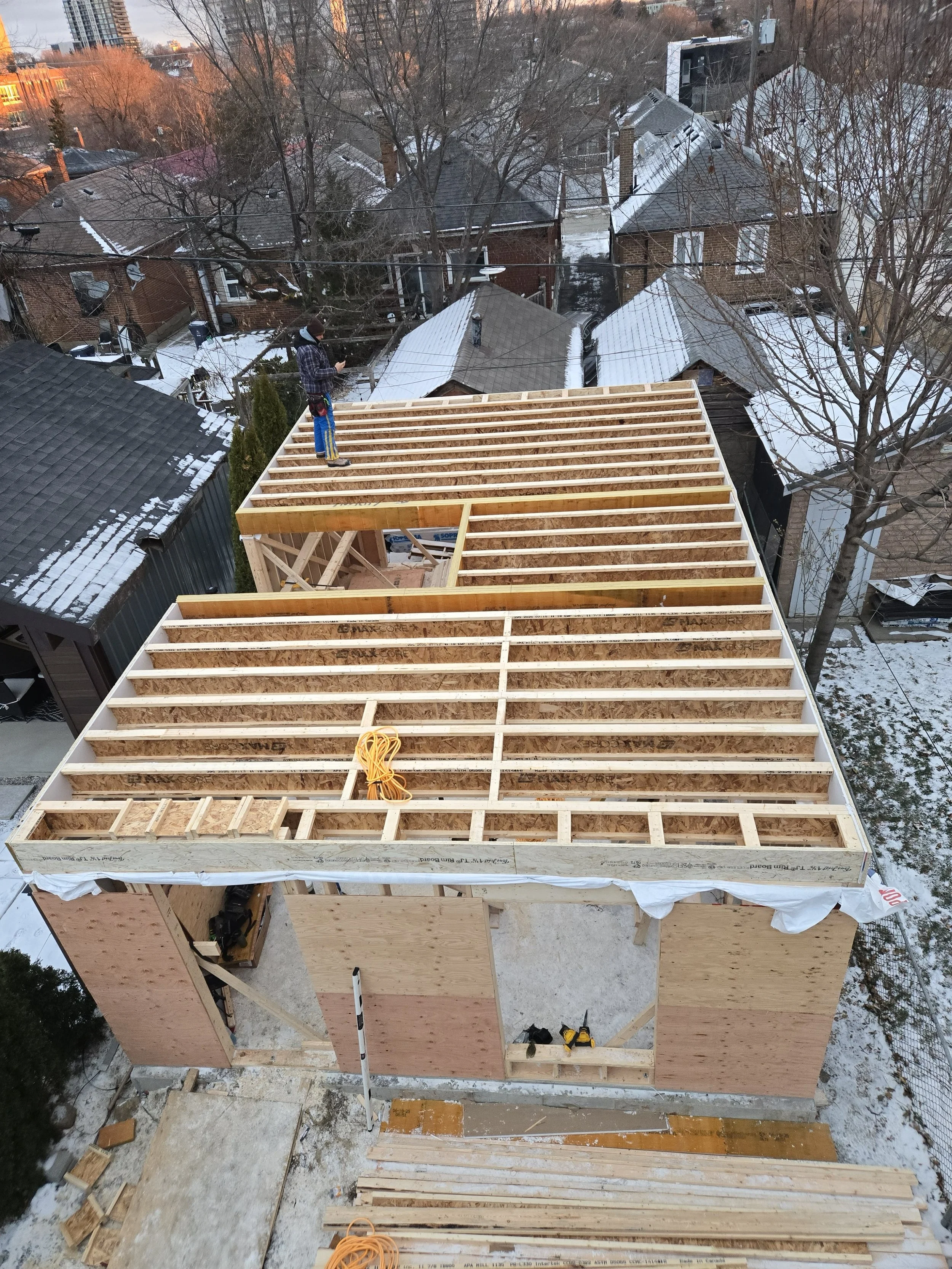
Multiplex Lower Level Framing
In multiplex builds, the basement or ground-floor unit often carries the most complex framing requirements: fire separations, shared mechanical rooms, stairwell framing, and party wall assemblies. CanaStruct regularly works with multiplex developers across Toronto, North York, and Scarborough to frame these lower levels to both structural and fire code standards.
Get started today.
Our Basement Framing Process
1. Initial Consultation
We start with a call or on-site visit to understand your basement project — scope, intended use, timeline, and budget. No pressure, just a straight conversation about what you need.
2. Site Assessment
We visit the basement to review dimensions, structural elements (beams, columns, posts), mechanical locations, and any conditions that affect the framing layout.
3. Detailed Estimate
You receive a clear, itemized estimate covering all labour and materials. We explain every line item so there are no surprises when work begins.
4. Project Planning
We coordinate with your GC, designer, or other trades to align the framing schedule with your overall renovation or build timeline.
5. Execution
Our basement framing crew gets to work — efficiently and precisely. We build walls, bulkheads, and openings according to your plan and applicable building code requirements.
6. Quality Check
Before we leave, our lead framer walks the space to verify plumb, level, fire assembly details, and overall framing quality. We don't move on until the work meets our standards.
7. Project Completion
We complete a final walkthrough with you or your GC and confirm the frame is ready for the next stage — mechanical rough-ins, insulation, and drywall.
Basement Framing: Wood vs. Steel Stud vs. DIY
Wood Framing vs. Steel Stud Framing
Wood is the traditional choice for basement framing and remains the most common in residential projects. It's widely available, easy to cut on site, and costs less per linear foot than steel. However, wood in a basement environment is susceptible to moisture over time, particularly if drainage or vapour barrier details aren't executed perfectly.
Steel stud framing costs more upfront but eliminates moisture risk entirely. Steel studs won't warp, rot, or attract pests. For basements in older Toronto homes where moisture history is unknown, steel is often the smarter long-term investment. CanaStruct can advise on the right choice for your specific space and conditions.
Professional Framing vs. DIY Basement Framing
DIY basement framing is popular on renovation shows, but the reality is more complicated. Toronto building permits require inspection at multiple framing stages, and an inspector can order a tear-down if work doesn't meet code. Errors in fire separation assemblies, beam clearances, or egress framing are costly to fix after the fact.
Professional framing contractors like CanaStruct bring speed, precision, and code knowledge that a first-time DIYer simply can't replicate. For a basement that will be rented out or sold, professional framing protects your liability and your investment.
Hiring a Framing Specialist vs. a General Contractor
A general contractor manages the full renovation but may subcontract the framing to whoever is available. Hiring a dedicated framing company like CanaStruct means your frame is done by specialists — people who do this work every day, not once in a while. Specialty framing companies consistently deliver faster turnarounds and tighter work at the framing stage.

Why Choose CanaStruct Inc
Licensed and insured: CanaStruct carries full commercial general liability insurance and WSIB coverage. Every backframing project is supervised by a qualified site lead and executed by experienced crew members, not day labour or untrained subcontractors.
Code compliance: Our framing contractors build to Ontario Building Code standards every time. We know what inspectors look for in basement framing, bulkhead construction, and structural framing applications, and we deliver inspection-ready work on the first attempt.
Experienced team: Our crew has completed backframing on projects ranging from single-room renovations in East York to full-basement development in Caledon and multi-unit conversions in North York. We've seen the full range of conditions in Toronto-area homes, old foundations, oddly placed mechanicals, sloped floors, and we know how to frame around them cleanly.
Quality standards: We take care with layout precision, plumb walls, and consistent stud spacing. Our bulkheads are level and tight. Our back-framed walls give the drywall trades clean, even nailing surfaces. Quality framing is invisible when it's done right; you see it in how everything else goes together.
Timelines: We commit to project schedules and stick to them. Backframing is often a critical path item, the trades behind us can't start until we're done. We respect that dependency and deliver on time.
Transparency: Our estimates are detailed and written. You see every line item, labour, materials, scope inclusions, and exclusions. There are no lump sums, no hidden markups, and no surprise invoices at the end of the job.
Local credibility: We've been active in Toronto's renovation and construction community for over a decade. We understand the specific challenges of framing in older Toronto homes, tight urban lots, low-ceiling basements, and buildings with decades of previous work to account for.
Service Areas we Serve
CanaStruct Inc provides back framing services throughout Toronto and the surrounding GTA municipalities. Our framing contractors are available for basement framing, bulkhead framing, interior back framing, and steel stud framing projects across the region.
Toronto (all commercial and industrial zones)
East York
Etobicoke
North York
Scarborough
Richmond Hill
Markham
Caledon
Mississauga
Oakville
Based outside these areas? Contact us, we assess all projects and regularly accommodate requests beyond our primary service zone.
Frequently Asked Questions
What is back framing and when do I need it?
Back framing is the structural framing installed behind walls, ceilings, and soffits to provide support for drywall and finishes, create chases for mechanical systems, or rebuild interiors after gutting. You need it during full renovations, basement development, and any project where walls or ceilings are being rebuilt from scratch.
What is the difference between structural framing and back framing?
Structural framing is load-bearing, it carries the weight of floors, walls, and roofs. Back framing is generally non-structural. It creates surfaces for finishes and conceals building systems, but it doesn't bear significant loads. That said, some back framing elements like headers over openings or backing for heavy wall-mounted fixtures require structural consideration.
Should I use wood or steel stud framing for my basement?
For basement perimeter walls in Toronto, we recommend steel stud framing in most cases. Steel doesn't absorb moisture, doesn't warp, and won't develop mould problems if a minor basement leak occurs. Wood framing is acceptable with proper vapour management and pressure-treated bottom plates, but steel stud systems offer better long-term performance in below-grade environments.
How much does basement framing cost in Toronto?
Basement framing costs in Toronto typically range from $8 to $16 per square foot depending on layout complexity, ceiling height, material choice, and the number of partition walls and bulkheads required. A standard 1,000 sq ft basement with basic layout and bulkheads might run $10,000 to $18,000 for framing labour and materials. CanaStruct provides free, line-item estimates for all projects.
Do framing contractors handle permits for backframing projects?
Permits are typically the responsibility of the homeowner or general contractor, not the framing subcontractor. However, CanaStruct works closely with your permit process, we can advise on what drawings and specifications the city requires, and we frame to pass the required rough-in inspection. We don't cut corners that would cause an inspection failure.
How long does basement framing take?
A typical basement framing project in the 800–1,200 sq ft range takes three to seven business days depending on complexity, the number of partition walls, and how many bulkheads are required. More complex layouts, wet walls, or projects with multiple ceiling heights may take longer. We provide firm timelines at the estimate stage.
Can CanaStruct Inc work as a framing subcontractor for GCs?
Yes. CanaStruct regularly works as a framing subcontractor for general contractors, developers, and design-build firms across the GTA. We're familiar with subcontractor expectations, we show up on schedule, communicate proactively, keep sites clean, and don't create problems for the trades behind us. Many construction framing companies in the GTA rely on us for backframing scope on their renovation projects.